In a nutshell
- 🔬 The brain’s dopamine system tags salient information during anticipation, with reward prediction error signals from the VTA boosting plasticity in the hippocampus and prefrontal cortex for stronger memory encoding.
- 🎯 Turn chemistry into habit: start with a micro-promise and curiosity gaps, use interleaving and spaced repetition, and time brief delays before feedback to maximise the learning signal without tipping into frustration.
- 🧩 Design for curiosity: build narrative arcs, offer choice to increase agency, reveal hints via progressive disclosure, and use peer explanation to strengthen predictions and retrieval.
- ⚠️ Avoid pitfalls: keep variable rewards ethical to prevent compulsion, manage arousal to curb anxiety, ensure accessibility with low-cost cues, and normalise error as data within clear structures.
- 📈 Measure what matters: prioritise delayed recall with retrieval practice, adjust uncertainty and feedback timing, and reward process—small, uncertain wins—over guaranteed prizes for durable learning.
Imagine learning that feels electric before it feels easy. The surprising accelerator isn’t another app or a longer revision timetable, but the chemistry of anticipation. When your brain expects something meaningful might happen, it releases a pulse of dopamine that flags incoming information as important. That signal primes memory systems to encode, link, and retrieve. It’s not mystical. It’s predictive. Anticipation, not the reward itself, is often the true engine of learning. From classrooms to coding bootcamps, the secret lies in shaping uncertainty, timing, and novelty so that your brain whispers: pay attention, this matters. The best part? You can design this effect on purpose, ethically and at low cost.
The Neuroscience of Anticipation and Memory
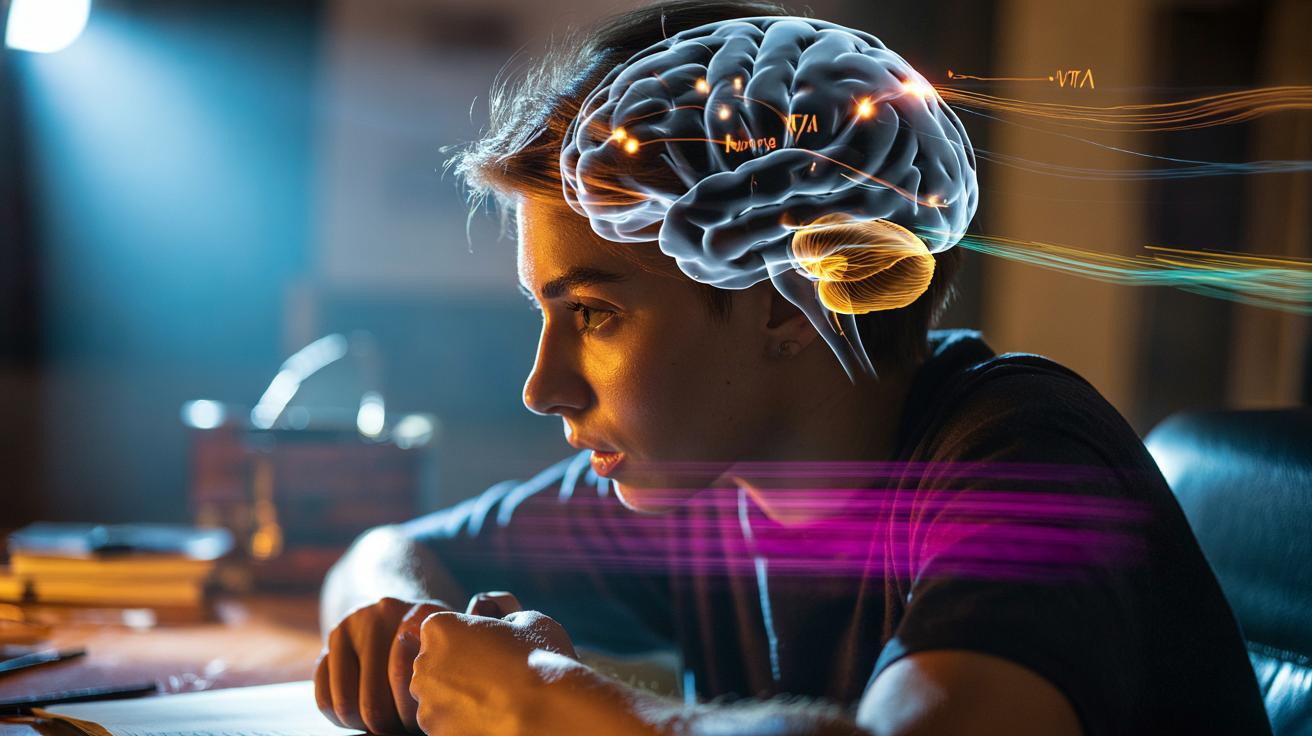
At the core is reward prediction error—the gap between what you expect and what you get. When outcomes are slightly better than predicted, neurons in the ventral tegmental area (VTA) fire, releasing dopamine to the hippocampus and prefrontal cortex. That surge doesn’t just feel motivating; it modulates synaptic plasticity, making it easier to store associations and retrieve them later. Memories that ride in on a wave of expectation tend to stick. Crucially, when everything is perfectly predictable, dopamine fades. Surprise, delivered judiciously, is the learning signal.
Think of dopamine not as a pleasure juice but as a salience tag. It highlights patterns, timetables attention, and tells the brain which details are worth oxygen and glucose. If you frame a lesson with a curiosity gap—a question that a learner is motivated to close—dopamine supports sustained exploration until the gap resolves. When the answer lands, integration improves. Short delays before feedback amplify the signal, provided the delay doesn’t tip into frustration.
It’s a balance. High stakes can spike arousal too far and impair working memory. Low stakes can lull. The sweet spot is variable, bounded uncertainty: enough unknowns to keep prediction error alive, not so many that cognitive control collapses. In practice, that means small risks, rapid cycles, and feedback that rewards process as much as outcome.
Turning Dopamine Dynamics into Daily Study Habits
Begin sessions with a micro-promise. State a bold, focused objective—“By minute 20, you’ll explain X without notes.” That declaration seeds anticipation. Follow with a brief puzzle or prediction: ask learners to guess an outcome before seeing data. Commitment first, content second. The forecast forces the brain to model the topic, so when reality arrives, dopamine marks the discrepancy and the concept anchors more firmly.
Use interleaving and short, mixed retrieval bursts rather than monolithic blocks. Three to five-minute quizzes that switch topics keep uncertainty alive and generate frequent, manageable prediction errors. Pair this with spaced repetition: re-surface material right before it would otherwise fade. That timing maximises the dopamine boost because the brain is unsure and pleasantly surprised by what it still knows. Add immediate, low-friction feedback—a graph, a color cue, a one-line rationale—to close loops quickly.
Gamify sparingly. Tiny, variable rewards—a rotating badge, an unexpected hint, a teacher shout-out—work far better than guaranteed, large prizes. Set a “streak” but allow forgiveness days so it doesn’t collapse into anxiety. Anchor every reward to a learning behaviour: a well-formed explanation, a brave wrong answer, a refined hypothesis. Celebrate effort that sharpens predictions, not just final scores. Over time, the routine itself becomes a cue for dopamine, making starting easier and staying focused less effortful.
Designing Learning Environments That Spark Curiosity
Architecture matters. Open with a question worth asking, not a definition. Stage content in narrative arcs: set-up, tension, reveal. Use contrasting cases—two problems that look similar but differ in one critical dimension—to create cognitive itch. Offer choice (which problem to tackle first, which example to apply) to restore agency; autonomy predicts stronger dopaminergic responses. Crucially, build progressive disclosure: reveal hints in steps so learners feel complicit in discovery rather than spectators to explanation.
| Technique | Why It Works (Brain) | Practical Cue |
|---|---|---|
| Curiosity gaps | Drives prediction, boosts dopamine tagging in hippocampus | Headline a lesson with a provocative question |
| Interleaving | Keeps uncertainty alive; prevents autopilot | Shuffle topics in short cycles |
| Delayed feedback (brief) | Amplifies reward prediction error | Ask for a guess, then reveal answer after 30–60 seconds |
| Variable rewards | Maintains anticipatory dopamine without fatigue | Surprise shout-outs, rotating badges |
In group settings, rotate roles—solver, skeptic, summariser—to engage different circuits. Use peer explanation, which forces retrieval and clarifies prediction models. Small, uncertain wins beat guaranteed prizes for durable learning. Track progress visually, but keep milestones near enough to feel attainable. The result: an environment where learners feel the tingle of what might be learned next, and memories lodge because the brain expects them to matter.
Beware the Pitfalls: Addiction Loops, Anxiety, and Equity
Dopamine is potent, not benign. The same variable reinforcement that sustains curiosity can, if overused, mimic the hooks of slot machines. Build hard stops, cool-downs, and reflective pauses into programmes. Replace infinite scrolls with session limits. Make rewards informational rather than purely hedonic: feedback that teaches, not trinkets that dazzle. Ethical design keeps anticipation in service of understanding, not compulsion.
Watch arousal. Too much uncertainty spikes cortisol and degrades working memory. Counterbalance with structure: clear rubrics, predictable schedules, and opt-out choices. Normalise error as data. When learners feel safe, they tolerate ambiguity better, which is where dopamine does its best work. Accessibility matters too. If curiosity triggers rely on cultural references or pricey tools, you widen gaps. Offer low-cost cues—good questions, contrasting examples, community feedback—that scale across classrooms and bandwidth.
Finally, measure what matters. Track retention after days and weeks, not just in-session thrills. Use retrieval practice as your scoreboard. If anticipation features aren’t improving delayed recall, re-tune the level of uncertainty, reward frequency, and feedback timing. The goal is not louder bells; it’s cleaner predictions and stronger memory traces.
Dopamine’s real magic isn’t in pleasure, but in preparation. When we engineer moments of meaningful “what if?”, the brain tags, stores, and retrieves with surprising efficiency. You don’t need lavish tech to do it—just sharper questions, paced reveals, and feedback that closes loops quickly. Anticipation makes attention cheaper and memory richer. What experiments could you run this week—five-minute prediction polls, interleaved mini-quizzes, surprise peer kudos—to see whether your learners remember more, sooner, and with less effort?
Did you like it?4.4/5 (22)