In a nutshell
- 🧪 Vinegar spray (5–8% acetic acid) reacts with limescale (calcium carbonate), forming soluble salts and CO₂—why fizzing signals deposits dissolving in minutes.
- 🚿 Step-by-step: spray generously, keep surfaces wet with a wrap, wait 5–20 minutes, agitate with a soft brush or pinch silicone nozzles, then rinse; repeat for heavy build-up.
- 🛡️ Safety first: limit contact on polished nickel and plated brass, keep acids off natural stone, never mix with bleach, and avoid pins that damage spray jets.
- 🧰 Alternatives and tools: citric acid offers a gentler scent, commercial descalers act faster but harsher; use microfiber, nylon brushes, gloves, and a bag for targeted soaking.
- 🔁 Prevention: weekly quick spritz-and-rinse, wipe dry after showers, clean inlet screens, and consider sediment filters or softeners to maintain pressure and shine.
Hard water leaves a stubborn calling card: chalky build-up that clogs jets, dulls chrome, and ruins a relaxing shower. The fix isn’t a costly chemical soak or a new fitting. It’s a simple vinegar spray that dissolves limescale in minutes. That speed is not magic; it’s chemistry. Acidity breaks down the mineral crust that narrows flow and sprays in all directions. Used right, it’s safe for most finishes, cheap, and surprisingly fast. In many cases you’ll hear fizzing within seconds, proof that the acid is biting into carbonates. Here’s how and why the method works, and how to get professional results at home.
The Chemistry Behind Fast Descaling
At the heart of the trick lies acidity. Most household vinegar contains 5–8% acetic acid. Limescale is largely calcium carbonate (with some magnesium compounds). When acetic acid meets those carbonates, it converts them into water-soluble salts and releases carbon dioxide. The reaction is simple to describe in words: acetic acid + calcium carbonate → calcium acetate + water + carbon dioxide gas. Those tiny bubbles you see and hear are CO₂ escaping as the crust loosens. That fizz is the audible signal your scale is dissolving.
The science matters for speed. Acid lowers pH at the surface, disrupting the crystalline structure and enhancing solubility. A spray delivers fresh acid to the mineral interface, maintaining a gradient that keeps the reaction moving. Warmth accelerates it further by improving diffusion. Crucially, vinegar targets the deposit rather than the underlying metal, which is why chrome and stainless steel generally tolerate brief exposure. Polished nickel and unlacquered brass are more reactive; keep contact short and rinse thoroughly. Biofilms and soap scum often interlock with scale, so as the carbonate dissolves, those films let go too. The result: freer jets, brighter metal, and normal spray patterns restored.
Even heavy mineral crusts yield quickly when acid can reach all sides of the deposit. That’s why spritzing and keeping the surface wet outperforms a quick wipe. Let chemistry do the heavy lifting and you’ll save elbow grease.
Step-by-Step Vinegar Spray Method
Gather a few basics: a spray bottle, white distilled vinegar, a soft brush or old toothbrush, a microfiber cloth, and a rubber band with a small plastic bag or paper towels. If jets are silicone nubs, your fingers are the best tool. Optionally add one drop of mild dish soap to the bottle; it reduces surface tension and helps the vinegar creep under the crust. Warm (not hot) vinegar works faster.
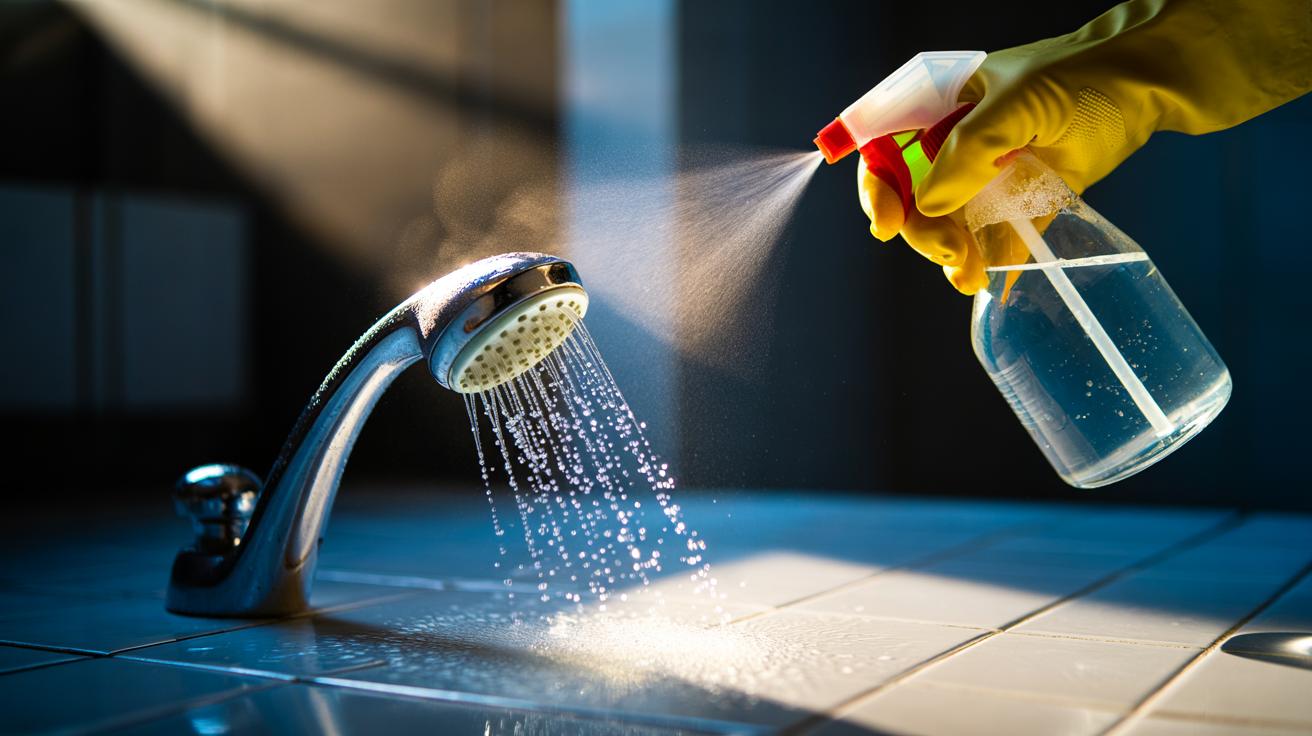
Turn off the shower and dry the head’s surface. Spray generously until every nozzle and crevice glistens. Wrap with a vinegar-soaked paper towel or secure a small bag of vinegar around the head with a rubber band to keep it wet. Wait 5–10 minutes for light scale, 15–20 for stubborn build-up. Don’t wander off for an hour on plated finishes; short, repeated applications are safer than a marathon soak.
Remove the wrap and gently agitate. Pinch silicone rubber nozzles to crack loose deposits. Use the soft brush on metal faces; avoid needles or pins that can enlarge spray holes. Rinse thoroughly with warm water by running the shower for 30–60 seconds. Still gritty? Repeat once. For deep clogs, unscrew the head, remove the filter screen, and soak only the mineral-laden parts for 10–20 minutes, keeping decorative surfaces above the liquid line. Rinse, reassemble with clean O-rings, and hand-tighten.
Finish with prevention. Wipe the head dry after showers to deny minerals a foothold. A weekly 2-minute spritz-and-rinse keeps jets pristine. Little and often beats occasional, harsh treatments.
Choosing the Right Acid and Tools
Vinegar is the hero because it balances effectiveness, safety, and cost. But it isn’t the only acid. Citric acid works quietly with a cleaner scent, while commercial descalers bring extra punch. Match the acid to the job and the material, then pair it with the right tools: a soft brush, microfiber cloth, rubber gloves, and a simple zip-top bag for targeted soaking. Avoid abrasive pads that scratch plating. Always test on an inconspicuous spot first.
| Option | Typical pH | Contact Time for Limescale | Material Cautions/Notes |
|---|---|---|---|
| White Vinegar (5–8% acetic) | ~2.4–2.8 | 5–20 minutes | Generally safe on chrome and stainless; limit on nickel, brass; avoid natural stone tiles. |
| Citric Acid (5–10% solution) | ~2.0–3.0 | 10–30 minutes | Mild smell; gentle on most metals; still avoid stone. May need longer on heavy scale. |
| Commercial Descaler | Varies (often <2) | 3–10 minutes | Fast but harsher; follow label; can attack plating if overused. |
Tool choices change results. A fine nylon brush reaches seams without scratching. A plastic bag concentrates acid on the head, not the wall. Microfiber buffs away residues and water spots. Gloves protect skin, and safety glasses help when brushing loosened flakes. Do not mix acids with bleach or peroxide, ever; keep it simple and single-ingredient for safe, predictable reactions.
Safety, Materials, and Common Mistakes
Scale hates acid; finishes don’t always. Keep vinegar strictly off marble, limestone, and travertine tiles, where it etches. Mask those with plastic film if the head is fixed near stone. On plated brass and polished nickel, use shorter cycles with fast rinses. If your shower head is oil-rubbed bronze or has a living finish, consult the manufacturer before any acid. When in doubt, treat the inner face only and wipe the shell with a damp cloth.
The biggest error is over-soaking. People set and forget, then blame the chemistry for dulled plating. Another common mistake: trying to poke jets clear with pins, which widens holes and wrecks spray patterns. Instead, pinch silicone nozzles and brush lightly. And never mix chemicals. Bleach + vinegar = chlorine gas. Rinse the spray bottle if it previously held anything else. Good ventilation matters too; acetic fumes are mild but unpleasant in small bathrooms.
Smart maintenance prevents repeat build-up. After descale, run hot water to purge loosened grit from the inlet filter. Consider a sediment screen at the hose connection or a whole-house softener in very hard-water areas. A quick weekly spritz takes under two minutes and pays back with full pressure and cleaner tiles. For renters, a removable, low-flow head with silicone nozzles is easier to keep scale-free. Consistency beats intensity for long-term clarity and shine.
Vinegar spray works because it puts targeted acidity where minerals are weakest, turning rock-hard scale into harmless, rinsable salts in minutes. It’s thrifty, low-tech, and, when used with care, gentle on fittings. Whether you’re rescuing a dribbly head or protecting a brand-new one from future build-up, a bottle of white vinegar and a soft brush can transform your morning routine. Ready to claim back pressure and sparkle—what’s your plan for making this simple ritual part of your weekly bathroom reset?
Did you like it?4.5/5 (24)