In a nutshell
- 🧪 Chemistry: Household vinegar’s acetic acid (~5%, pH 2–3) neutralises alkaline residues, dissolves mineral deposits, and loosens tannin stains, lifting dirt while brightening fibres.
- 📏 Ratios & safety: Use 1:1 vinegar:water for most stains (go 1:2 on delicate fibres); avoid coloured vinegars; patch-test first and never mix vinegar with bleach.
- 🧼 Quick method: Blot, don’t rub, lightly mist solution, allow a short dwell, blot from the outside in, then rinse with water, towel-weight to wick moisture, and vacuum when dry.
- 🐾 Stain specifics: Add a drop of washing-up liquid for grease; for pet urine, follow with an enzyme cleaner; set dyes, paint, or tar may need professional spotters.
- 🧵 Textile tips & care: Keep contact times short on wool; most synthetic fibres are tolerant; prevent re-soiling with thorough drying, routine vacuuming, and bicarbonate for odours (not combined with vinegar).
Spilled tea, tracked-in mud, an oily pawprint – the daily dramas that sabotage a smart carpet don’t always need a costly rescue. Reach for a humble bottle of white distilled vinegar and plain water. Thanks to its active ingredient, acetic acid, a simple vinegar solution can loosen grime, brighten fibres, and neutralise odours with surprising speed. Used correctly, it’s gentle on most synthetic blends, kinder on the environment, and tough on discolouration. Always patch-test in an inconspicuous corner before treating the stain. With smart dilution, light agitation, and careful blotting, you can shift stubborn marks quickly – and avoid the crunchy residue commercial sprays often leave behind.
How Acetic Acid Lifts Stains
Vinegar’s power comes from acetic acid, a weak organic acid (about 5% in household white vinegar) with a pH around 2–3. That acidity does three things carpet fibres appreciate. First, it helps neutralise alkaline residues left by soil or detergent, reversing “soap lock” that traps dirt. Second, it dissolves mineral deposits from hard water, which can stiffen pile and set stains. Third, acidic conditions can weaken the bonds holding certain stains – especially tannins from tea, coffee, or wine – letting pigment molecules lift during blotting. The result: cleaner fibres, less greying, brighter tone.
There’s chemistry at play within the weave. Many stains cling through ionic attraction or by embedding in microscopic roughness on each filament. A light acid bath changes that micro-environment, shifting charge balance and softening residues so they release. Used promptly, vinegar interrupts the “setting” phase that turns a fresh spill into a permanent mark. Crucially, it does so without adding the sticky polymers or brighteners found in some store-bought sprays, which can attract dust and darken traffic lanes over time.
Ratios, Materials, and Safety You Should Know
For most household jobs, mix 1 part white vinegar to 1 part cool water. For delicate fibres or darker colours, go milder at 1:2. Cleaning vinegar (around 6%) is stronger; halve it with water first, then adjust. Avoid malt or cider vinegar; colourants and sugars can cause their own marks. On synthetic fibres like polypropylene or nylon, vinegar is generally safe. Wool and wool blends tolerate gentle acidity but require shorter contact times and less wetting. Never saturate the backing, as trapped moisture can delaminate latex adhesives or encourage underlay odours.
Never mix vinegar with bleach or any product containing chlorine. This can release hazardous gases. Keep it away from natural stone thresholds adjacent to carpet; acids etch limestone and marble. For greasy stains, a drop of washing-up liquid in the vinegar mix helps emulsify oils. For pet urine, vinegar can help neutralise alkaline salts, but heavy contamination needs an enzyme cleaner after the acid step to tackle uric compounds. The golden rules are simple: patch-test, dilute, control moisture, and rinse lightly after lifting the stain to keep the pile soft.
| Stain Type | Vinegar:Water | Dwell Time | Notes |
|---|---|---|---|
| Tannin (tea, coffee, wine) | 1:1 | 2–5 mins | Blot, don’t rub; cool water rinse |
| General soil/traffic grey | 1:1 | 3–7 mins | Brush lightly to lift pile |
| Grease/food oils | 1:1 + drop of washing-up liquid | 2–4 mins | Blot oil first with paper towel |
| Pet urine (fresh) | 1:2 | 2–3 mins | Follow with enzyme cleaner if odour persists |
A Quick, Proven Method: From Spill to Sparkle
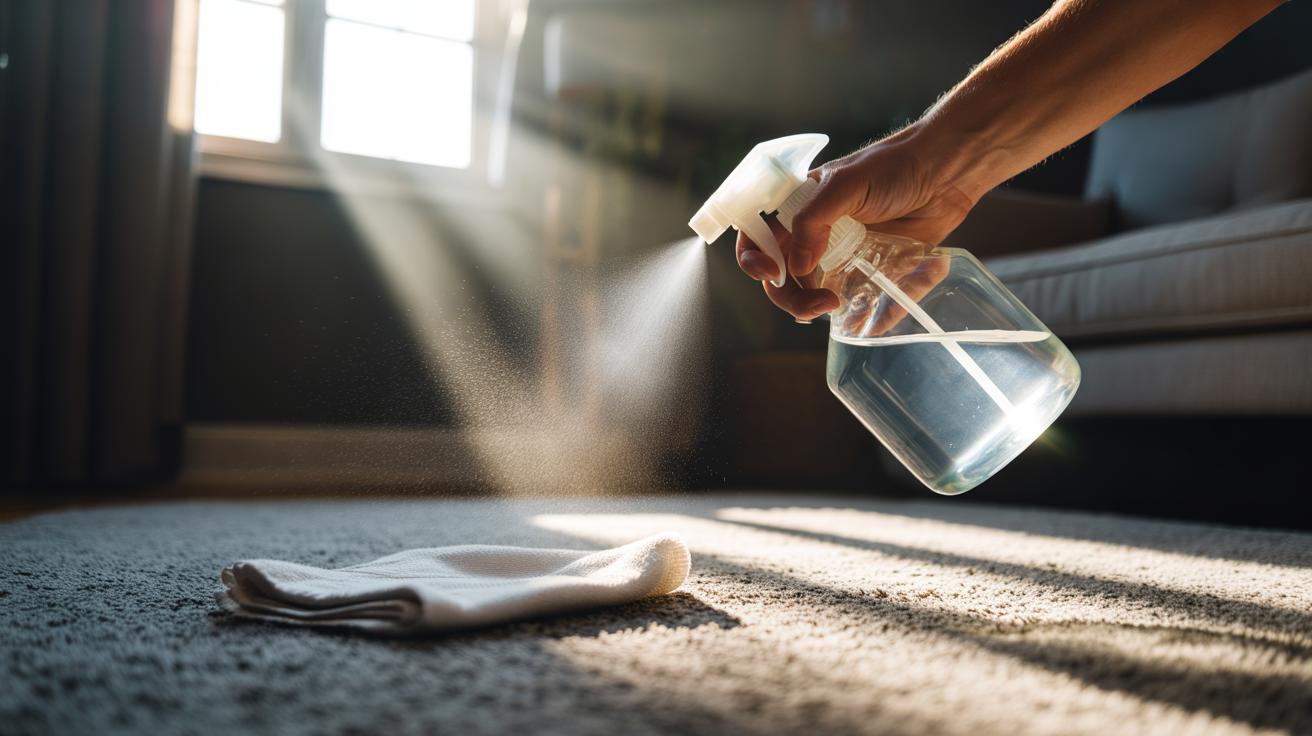
Act fast. Speed beats scrubbing. Start by blotting with a clean white cloth or kitchen roll, pressing – not rubbing – to lift as much liquid as possible. Mix your vinegar solution, then mist the stained area lightly. You want even coverage, not a puddle. For stuck-on debris, lift gently with a spoon edge first. Keep the solution on the fibres, not the backing. Let it dwell for a couple of minutes while you assemble fresh cloths.
Now blot. Work from the outside in to prevent spreading. Rotate to clean sections of cloth with each press. For pile that’s crushed, a soft brush can help tease fibres upright between blots. If colour transfers heavily to the cloth, pause and reassess your dilution. Once the mark lightens significantly, mist with plain water to rinse away loosened residues and any lingering acidity. Blot again until the cloth comes away nearly clean.
Finish smart. Lay a dry towel over the area, weigh it with a book, and leave 30 minutes to wick out hidden moisture. Lift, replace with a fresh towel if needed, then air-dry. To prevent a cleaning ring, lightly mist the surrounding area with water and blot so the boundary dries evenly. When dry, vacuum to realign the pile. If a faint halo remains, repeat the cycle once rather than scrubbing harder.
Limits, Textile Caveats, and Long-Term Care
Acid excels with tannins, mineral marks, and detergent residues, but it has limits. Synthetic food dyes, paint, or tar require different chemistry. Old protein stains can “cook” if heat was applied; vinegar can brighten them slightly but may not erase them. On wool, shorter dwell times reduce dye migration risks. On solution-dyed polypropylene, vinegar is safe yet may not shift oil without a surfactant assist. If a stain survives two careful passes, call a professional cleaner with targeted spotters and hot-water extraction to avoid over-wetting.
Build a routine that prevents re-soiling. Vacuum high-traffic lanes slowly once a week. Treat spills the moment they happen. After vinegar cleaning, a light water rinse and thorough drying stop sticky residues from attracting dust. For lingering odours, let the area dry, then sprinkle bicarbonate of soda; vacuum after an hour. Don’t combine bicarbonate with vinegar in the carpet – they neutralise each other and add moisture. Keep your toolkit simple: white vinegar, water, white cloths, a spray bottle, and patience. This quiet arsenal handles most emergencies with minimal fuss and no harsh fumes.
Vinegar’s secret is elegant: a small shift in chemistry that frees trapped soil and restores pile clarity without a cupboard full of bottles. For households juggling pets, children, and weather, that’s a welcome, wallet-friendly ally. Used with restraint, it prevents crunchy residues, curbs odours, and keeps colours lively. When you’ve seen how swiftly acetic acid tackles fresh discolouration, the bottle earns a permanent spot under the sink. What stubborn carpet challenge are you planning to test with a measured splash of vinegar and a clean white cloth?
Did you like it?4.4/5 (27)