In a nutshell
- ⚗️ The science: acetic acid (pH ~2.4) rapidly dissolves limescale and soap scum, with light chelation to keep debris suspended and safe, smear-free removal on glass.
- ⏱️ The method: a 10-second dwell time, a fine mist, and straight, overlapping wipes with a clean microfibre or a squeegee deliver cloud-free clarity fast.
- 🧰 Ratios and tools: use neat vinegar for hard deposits and a 1:1 warm-water mix for routine glass; add one tiny drop of washing-up liquid for fingerprints; consider deionised water in hard-water areas.
- ⚠️ Safety first: do not mix with bleach; avoid natural stone, unsealed grout, and delicate coatings (tints, oleophobic layers); ventilate and test inconspicuous spots when unsure.
- ✨ Streak-proof finish: work on cool glass, use tight-weave microfibre washed without softener, wipe squeegee blades between passes, and finish with a dry buff for a brilliant shine.
There’s a small bottle in your cupboard that can leave windows, mirrors and shower screens looking like they’ve been professionally polished: vinegar. Not a trendy cleaner, not a lab experiment—just acetic acid at around 5%, a pantry staple that eats haze for breakfast. In the time it takes to tie your shoelaces, it can dissolve limescale film, soap residue and the cloudy fog that turns glass from crisp to dreary. Used right, it’s fast, safe on glass, and fantastically frugal. Ten seconds of contact is often all it takes to release that grip of mineral grime and restore a cloud-free shine. Here’s how it works, and how to nail the method every time.
How Acetic Acid Cuts Through Grime in Seconds
Vinegar’s power lies in chemistry, not elbow grease. Its active component, acetic acid, has a pH around 2.4 in standard kitchen bottles. That mild acidity is perfect for glass: strong enough to attack alkaline deposits, gentle enough to avoid etching. Calcium carbonate—the backbone of limescale—reacts with acetic acid and dissolves into soluble salts and carbon dioxide, breaking the whitish haze within seconds. Soap scum, often a mix of fats and minerals, is disrupted in the same quick window because the acid frees the minerals that bind the film to the surface. The acetate ion also offers light chelation, helping keep loosened particles suspended so they wipe away cleanly rather than re-smearing.
Glass doesn’t absorb residue, so once the mineral bonds are broken, the job is mostly about dwell time and removal. That’s why a ten-second wait, not frantic scrubbing, unlocks the speed. Fresh haze lifts almost instantly; baked-on film or silicone-laden sprays may need a second round. Vinegar isn’t a degreaser in the classic sense, but on glass the main enemy is mineral-based clouding, not pure oil. Add one tiny drop of washing-up liquid if fingerprints are heavy. Precision beats force; let the acid do the work.
The 10-Second Method: Ratios, Tools, and Technique
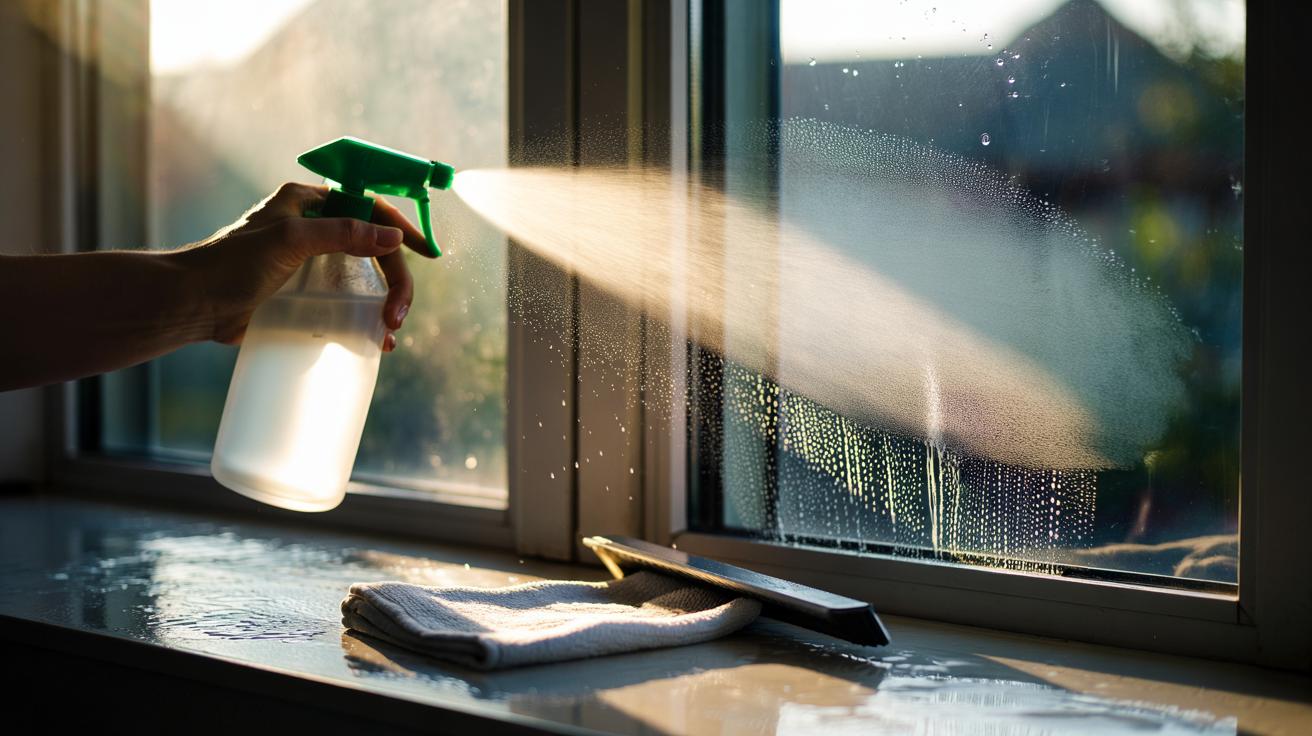
Set up is simple. Use a trigger bottle with either neat white vinegar or a 1:1 mix with warm water for routine jobs. Mist the glass lightly—don’t flood—and step back. Count to ten: that dwell time is your secret weapon. With a clean microfibre cloth folded into quarters, wipe in straight, overlapping strokes, then flip to a dry side for a quick buff. For larger panes, run a squeegee from top to bottom, edge to edge, wiping the blade after each pass. Finish with a dry edge wipe where drips lurk. For mirrors, less liquid equals fewer streaks; aim for a fine mist and a crisp buff.
| Glass Type | Vinegar Dilution | Dwell Time | Notes |
|---|---|---|---|
| Shower screen (limescale haze) | Neat | 10–30 sec | Repeat on heavy deposits |
| Windows (general) | 1:1 with warm water | 10 sec | Squeegee for larger panes |
| Mirrors | 1:1 | 5–10 sec | Use fine mist; buff dry |
| Hard water spots | Neat | 20–40 sec | Agitate with microfibre |
Work cool and in shade to avoid flash-drying that causes streaks. If tap water is very hard, make your mix with deionised water to reduce mineral re-depositing. Some pros spike the bottle with a single drop of soap to break oils on fingerprint-prone glass, but keep it tiny to avoid residue. If the glass still looks cloudy after the first pass, don’t push harder; re-mist, give it another ten, and let the chemistry finish the job.
Safety, Surfaces, and Smart Exceptions
Vinegar is kind to glass, but it’s not a universal cleaner. Never mix vinegar with bleach—this creates toxic chlorine gas. Keep it away from natural stone such as marble, limestone and some granites; acids etch those surfaces irreversibly. Avoid unsealed grout, which can be weakened by repeated acidic exposure. For automotive interiors, be cautious around tinted films and screens with oleophobic coatings; vinegar can degrade specialist finishes over time. On older leaded or stained glass, test a corner first to check for reaction with patina or cames. Painted window frames and rubber seals are usually fine with brief contact, but don’t soak them—wipe any runs promptly and finish with a water-damp cloth.
Ventilation matters. Though vinegar’s odour is short-lived, small bathrooms can feel pungent; crack a window for comfort. Gloves are optional, but those with sensitive skin may prefer them. Use a dedicated cloth for glass and wash it without fabric softener, which leaves films that streak. If pets or children are underfoot, the low toxicity of vinegar is a bonus, but store concentrates out of reach. When in doubt—especially with specialty glazing, anti-glare coatings, or heritage panes—check manufacturer guidance or try a tiny, inconspicuous spot first.
Bonus: Streak-Proof Finishing and Window Wisdom
Streaks are rarely the fault of vinegar; they’re usually a legacy of detergent residues, softener-laden cloths, or hard water drying marks. Switch to a high-quality, tight-weave microfibre (around 300–350 GSM), washed hot with plain detergent and no softener. Fold the cloth to create multiple clean faces and rotate them as you work. Cool glass cleans better than hot glass, so choose shade and avoid midday sun on exterior panes. For very glossy finishes, a final pass with a second, bone-dry cloth gives a camera-ready sheen. A squeegee speeds large areas; wipe the blade after every pass to prevent lines.
Fingerprints on mirrors often contain oils; if a faint smear persists, add one drop of washing-up liquid to your mix or buff with a dry edge after squeegeeing. In very hard-water areas, a last rinse with deionised water before the dry pass eliminates mineral specks. Newspaper can work, but modern inks and coatings vary; a purpose-made glass cloth is more consistent and leaves fewer fibres. For rain-spattered exterior windows, pre-rinse loose grit, then apply vinegar so you’re not grinding dust across the pane. The habit to keep: light mist, 10-second dwell, deliberate removal, and a crisp buff.
Vinegar earns its place because it’s fast, cheap and effective against the very thing that dulls glass most: mineral haze. Used with a patient ten-second pause and a clean cloth, it unlocks that crisp, cloud-free finish without the fuss of specialised sprays. Let the acid break the bonds, then remove what’s been loosened—simple science, reliable results. From shower screens to patio doors, the method scales effortlessly and costs pennies. What pane will you test first, and which small tweaks—dwell time, cloth choice, or water quality—do you think will make the biggest difference in your home?
Did you like it?4.4/5 (25)