In a nutshell
- 🧪 The fizzing chemistry of baking soda and white vinegar creates CO₂ bubbles that agitate sludge and soap scum, with mild alkalinity aiding saponification to loosen grease—often clearing slow drains in minutes.
- 🧰 Step-by-step: Warm pipe with hot water, add 1/2 cup baking soda, pour 1 cup vinegar, cover, wait 10–15 minutes, then flush hot; simple tweaks (covering the drain, tapping the trap) improve reach and effectiveness.
- 🚫 Know the limits: Dense hair mats, hardened fat plugs, or objects rarely yield to fizz; use a drain snake, clean the trap, or call a pro—and never mix with bleach or recent chemical cleaners.
- 🌿 Safer and greener: Gentler on PVC, copper, and seals, with benign by-products and lower wastewater impact; generally septic-friendly when used correctly and flushed thoroughly.
- 🛡️ Prevention & tips: Monthly maintenance doses, pairing with a plunger or hair hook, and attention to bottle traps and hard-water limescale can keep drains flowing and reduce future blockages.
Every household has faced that dispiriting moment: water creeping up the sink, a slow gurgle, a whiff of something sour. The solution is rarely glamorous, yet it can be ingeniously simple. With two humble staples—baking soda and white vinegar—you can dislodge a surprising number of clogs without harsh chemicals or a costly call-out. It’s quick. It’s cheap. It’s kinder to pipes. And in many cases, it works in minutes. Here’s why this fizzing duo packs a punch, how to do it right the first time, and when to reach for alternative tactics. Think of it as a journalist-approved rescue plan for drains in real homes, on real schedules.
How the Fizzing Reaction Breaks Blockages
The magic is chemistry, but it plays out like mechanics. Baking soda (sodium bicarbonate, a mild alkali) and vinegar (acetic acid) react to produce carbon dioxide gas and water. That fizz isn’t just theatre. The effervescence scours the inner surface of the pipe, agitating sludge, food particles, soap scum, and early-stage grease build-ups. The bubbles expand into crevices and push at the edges of the blockage, loosening what a trickle of hot water alone cannot budge.
There’s more. In the presence of fatty residues from cooking, alkalis help kick-start saponification—essentially turning a smear of grease into a more movable, soap-like substance. The reaction’s by-product, sodium acetate, is largely harmless and water-soluble, so it rinses away cleanly. Unlike corrosive chemical drain cleaners, this approach is gentle on PVC, copper, and most rubber seals when exposure is brief. It’s odour-limiting too: neutralising acidic pong is part of the package. Is it a cure-all? No. But for slow drains and early clogs, the fizz behaves like a micro-plunger working along the pipe’s length.
Step-by-Step Method That Works in Minutes
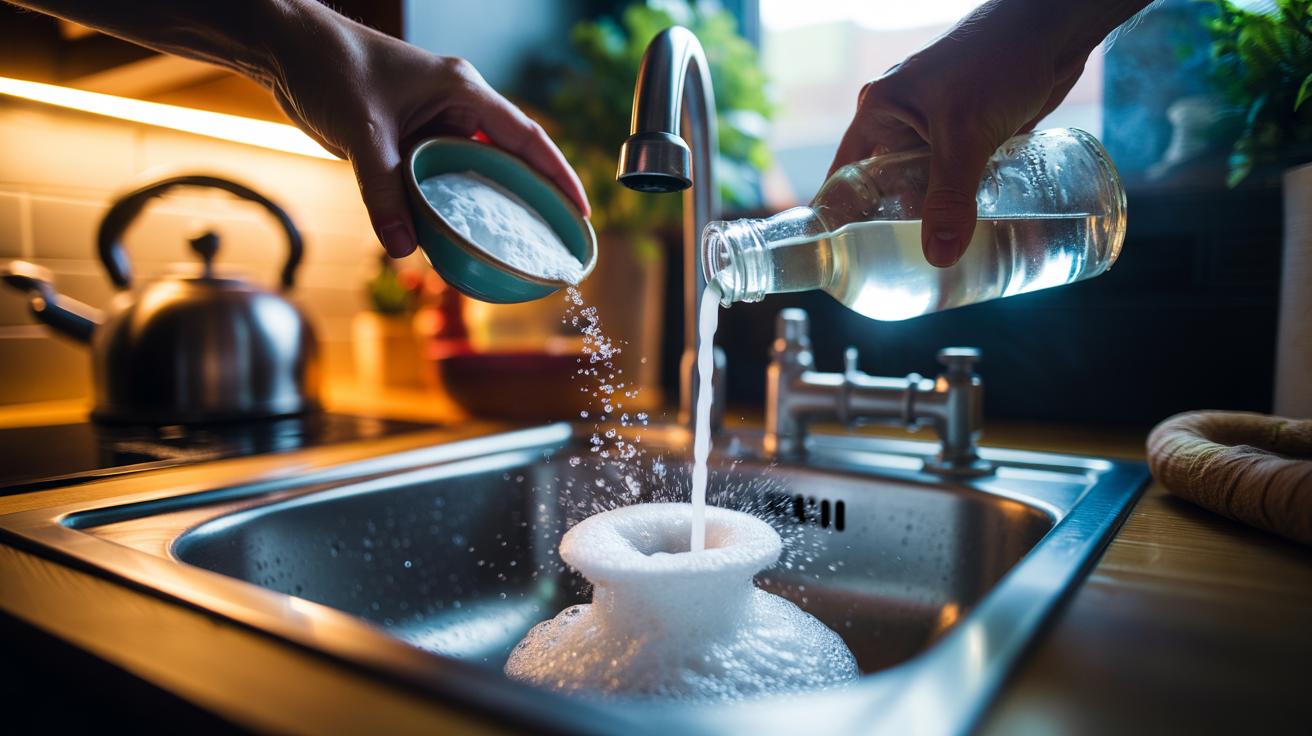
Success depends on sequence and contact time. Start by clearing the drain opening, removing any visible debris or hair. Boil a kettle. Pour a quarter down the drain to warm the pipe and soften grime. Then add 120–150 ml (about 1/2 cup) baking soda, tapping the trap so the powder falls deeper. Follow with 250–300 ml (about 1 cup) white vinegar. Cover the opening with a plug or a small plate to drive the fizz downward, not up into the room. Wait 10–15 minutes to let the reaction do its work. Finish with the remaining kettle of hot water to flush dislodged material away.
| Scenario | What to Do |
|---|---|
| Slow sink (kitchen) | 1/2 cup baking soda + 1 cup vinegar; wait 15 min; flush with hot water |
| Bathroom drain with soap scum | 1/2 cup baking soda + 1 cup vinegar; cover; repeat once if needed |
| Stubborn odours | Use the method at night; leave fizz to rest 20 min before final flush |
| First signs of slowdown | Quarter-dose maintenance monthly to prevent build-up |
Tips make the difference. If you have a bottle trap common in UK sinks, the warm pre-flush helps the reaction reach beyond the bend. For hair-prone showers, combine the fizz with a physical extraction tool. Never mix the method with bleach or recent commercial drain opener residues—flush the system thoroughly first.
When It Works Best—and When to Try Something Else
Use it when the drain is slow rather than sealed shut. Fresh grease films, congealed soap, coffee grounds, toothpaste slurries, and early biofilm respond well to the bicarbonate–vinegar routine. If the water still moves, even grudgingly, fizz can chase the blockage along the pipe and over the next gradient. A small plunger session before the final hot-water flush often amplifies the result, nudging debris into motion. If the sink is standing full and motionless, you likely need mechanical help first.
There are limits. Dense hair mats bound with conditioner, hardened cooking fat that’s cooled into a waxy plug, or foreign objects (toothpicks, bottle caps) rarely surrender to chemistry alone. In those cases, try a drain snake, remove the trap for a manual clean, or call a professional. Be cautious with timing: do not deploy baking soda and vinegar after using a caustic or oxidising drain cleaner. The reactions can neutralise each other and release unpleasant gases. If your property has old galvanised steel pipes with heavy scale, expect only partial improvement; the fizz won’t rebuild lost pipe diameter, though vinegar may nibble at limescale on the surface.
Why This Fix Is Safer for Your Home and the Planet
There’s a reason plumbers and water companies urge restraint with harsh drain cleaners. Caustic agents can pit metal, embrittle seals, and injure skin or eyes. By contrast, the baking soda and vinegar method is low-risk when used correctly and leaves behind benign by-products. It reduces the chemical load entering wastewater treatment, a quiet win for rivers and coastal ecosystems. For households on septic systems, the occasional fizz is generally acceptable—short exposure and copious post-flush water keep the tank’s microbial community comfortable.
It’s budget-friendly as well. A supermarket tub of bicarbonate and a bottle of vinegar often cost less than a single-use chemical gel, and they handle cleaning jobs beyond drains—fridges, worktops, laundry deodorising. In the UK, where hard water is common, vinegar’s mild acidity also helps loosen mineral film near the plughole, improving flow. Yet moderation matters: avoid prolonged soaking of delicate rubber gaskets in straight vinegar, and stick to the fast, fizzing cycle. Preventative use—small monthly doses when the sink is flowing—beats waiting for a crisis. The greenest fix is the one that stops clogs forming at all.
There you have it: a quick, credible way to restore flow without fumes or drama. Harness the fizz, be patient for a quarter-hour, and flush hot to finish the job. If the drain snarls again, pair the method with a plunger or a simple hair hook before calling in reinforcements. Your pipes, your wallet, and the local waterway will thank you. So, will you reach for the bicarbonate and vinegar tonight—or try a different tactic for your sink’s next stand-off?
Did you like it?4.4/5 (27)