In a nutshell
- 🔌 Wet electronics fail fast as water plus contaminants cause shorts and rapid corrosion; the lifesaving first move is to power off immediately and avoid pressing buttons.
- 🌾 Rice is a mild desiccant that can lower humidity overnight but it’s slower than silica gel and can shed dust—best used as a stopgap, not a cure-all.
- 🧰 Rescue sequence: power down, remove trays/cards, blot, rinse sticky spills with distilled water, ideally displace moisture with 99% isopropyl alcohol, then dry in a sealed container (silica or rice), ports down, and no heat.
- 🧪 Outcomes hinge on drying speed and residue removal; fresh water is manageable, while salt water accelerates damage and sugary drinks leave destructive deposits.
- 📊 Practical takeaways: silica dries faster than rice; typical success windows range from hours to a day; elevate the device, avoid premature booting, and seek professional cleaning if symptoms persist.
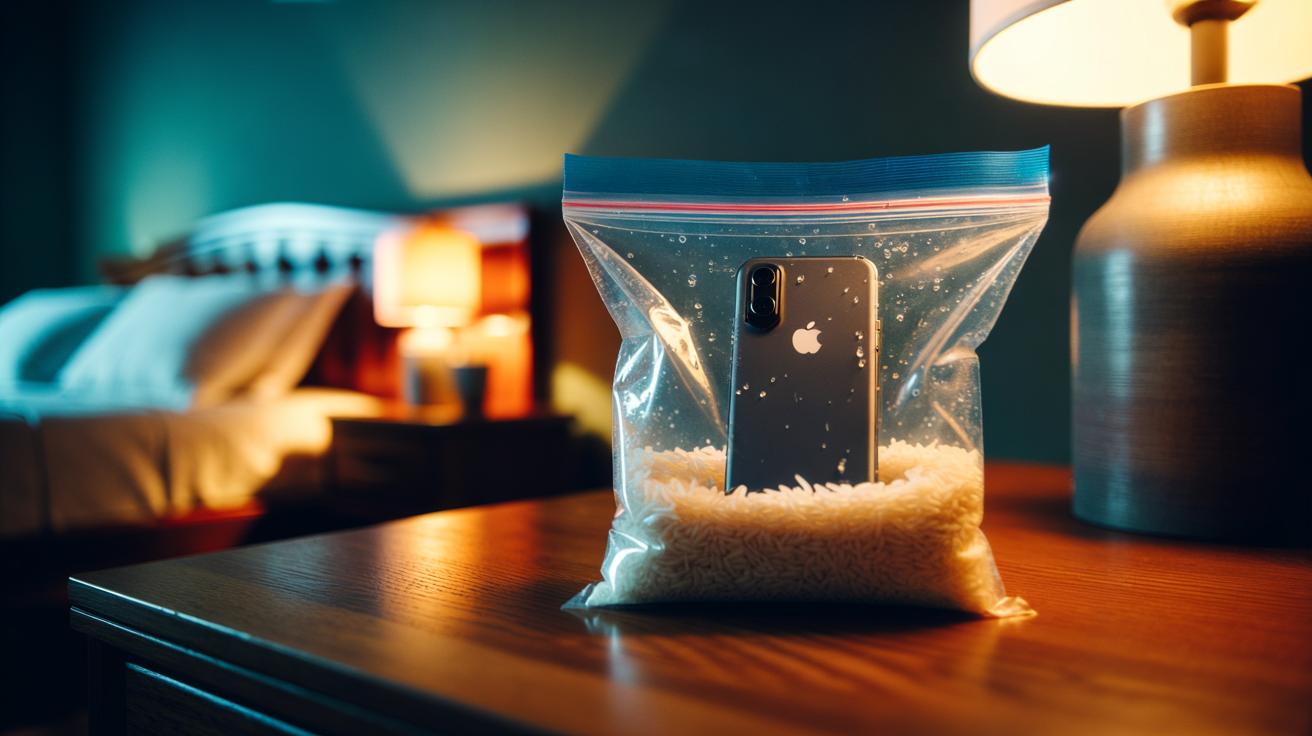
We’ve all done it. A phone slips into a sink, rain floods a backpack, or a coffee tips across a keyboard, and panic sets in. Then comes the folk remedy: bury the device in a bag of rice and pray for a miracle by morning. As with many household hacks, there’s more science lurking beneath the surface than you might expect. Act quickly, act calmly, and you can dramatically tilt the odds in your favour. Here’s how the humble grain can help, when it won’t, and the precise steps that give soggy electronics the best chance of revival overnight.
What Actually Happens Inside a Wet Phone
Water is not the only villain. It’s what rides along with it—salts, sugars, minerals—that wreaks havoc on circuitry. When moisture infiltrates, capillary forces draw liquid beneath chips and into ports, creating microscopic bridges between components. That bridge is a short circuit waiting to happen. Corrosion starts fast. Within hours, oxygen, moisture, and contaminants etch delicate traces and eat at solder joints. Every minute powered on accelerates damage by feeding those conductive paths. That’s why the first rule is brutal but essential: power off immediately.
Once the device is off, the battle becomes a race between evaporation and corrosion chemistry. Evaporation needs airflow, surface area, and time. Corrosion needs ions, moisture, and time. You can influence two of those variables. Remove SIM trays and cases to boost ventilation; wick away visible droplets; avoid heat that warps seals. Drying isn’t just about the big puddles you can see. It’s about micro-pockets beneath shields and along flex cables where liquid lingers, often unseen, quietly sabotaging the morning after.
Why Rice Works—and Where It Fails
Let’s get honest about rice. It’s a mild, accessible desiccant. In a sealed bag, uncooked rice absorbs some ambient humidity and, over several hours, helps draw moisture from ports and enclosures. That’s useful. It’s also limited. Rice is far less thirsty than silica gel or molecular sieve beads, and it can’t pull water out from under components where capillary lock holds it tight. Rice won’t reverse corrosion that has already started; it only helps reduce the moisture that fuels it. In short: it’s better than doing nothing, but it isn’t magic.
There are other pitfalls. Rice sheds dust and starch; those particles can lodge in speaker meshes and USB-C apertures, complicating charging and muffling audio. Speed matters too. The first hour after a dunk is critical, and rice simply doesn’t work quickly. A controlled draft of air, or a sealed container packed with fresh silica packs, typically removes vapour far faster. Still, rice has one powerful virtue: ubiquity. At 11 p.m., in a hotel room or student flat, it can stabilise a device while you prepare a more effective intervention by morning.
A Step-By-Step Rescue Plan for Overnight Revival
Rule one: kill the power. Switch the device off. Don’t press buttons repeatedly. Don’t shake it. If it’s already off, keep it that way. Remove cases, SIM trays, memory cards. Blot—not rub—visible moisture with a lint-free cloth. For salt or sugary spills, gently rinse the exterior with distilled water to remove residues; tap water adds minerals you don’t want inside.
If you’re equipped, the gold standard is a careful rinse in 99% isopropyl alcohol to displace water and dissolve contaminants, then air-dry. If not, create a sealed environment: a zipper bag or plastic box with generous silica gel packs. No silica? Use rice as a stand-in. Nestle the phone in, ports facing down, on a small rack or tissue to keep grains out of openings. Do not apply heat. Warm radiators, hairdryers, or ovens deform gaskets and blow liquid deeper.
Leave it undisturbed overnight. Resist the urge to “just check”. In the morning, inspect ports with a torch; if any fog or residue remains, give it more time. Before powering on, connect a cable to confirm the port is free of debris; if resistance or error messages appear, stop. Power up only when you’re confident the internal moisture load has dropped. If it boots but behaves oddly—muted speakers, erratic touch—schedule a professional cleaning to halt slow-burn corrosion.
Testing, Data, and Real-World Outcomes
Lab tests and repair bench logs converge on a practical truth: drying speed and residue removal decide outcomes. Silica outperforms rice by a wide margin. Isopropyl rinses outperform both by stripping salts and sugars before drying begins. Still, in uncontrolled scenarios—garden puddle, kitchen spill—access to pro gear is rare. That’s where a clear, staged plan shines: stop power, remove residues, then dry effectively. The sequence matters more than any single tool.
| Method | Relative Drying Speed | Residue Removal | Risks | Typical Success Window |
|---|---|---|---|---|
| Uncooked Rice (sealed) | Slow | Poor | Dust in ports; slow action | 12–48 hours |
| Silica Gel Packs | Fast | Poor | Few if sealed | 6–24 hours |
| 99% Isopropyl Rinse + Dry | Fast | Excellent | Mishandling electronics if overdone | 4–24 hours |
| Gentle Airflow (no heat) | Moderate | Poor | Forces moisture deeper if strong | 8–36 hours |
Outcomes vary by liquid type. Fresh water is survivable. Salt water accelerates damage dramatically. Sugary drinks are worst: sticky residues haunt microphones and buttons long after moisture departs. That’s why residue management is on par with drying speed. If you must rely on rice overnight, use it strategically: sealed container, device elevated, ports down, no premature boot-ups. Then, when you can, shift to silica or a professional clean to lock in the win.
Rice can indeed “revitalise” devices overnight, not by sorcery but by modest humidity control that buys precious time. Pair it with disciplined steps—power down, residue removal, sealed drying—and your odds improve sharply. Some nights, that’s enough to wake to a working phone and a sigh of relief. Other times, corrosion has already started its silent work, demanding a deeper clean. With your next splash or spill, will you reach for the rice alone, or deploy a smarter, staged rescue that stacks the deck in your favour?
Did you like it?4.4/5 (29)