In a nutshell
- 🧽 Uses uncooked rice for gentle abrasion that lifts mineral deposits and haze without scratching glass, especially in tight-necked vases.
- 🧪 Combines a rice swirl with warm water and vinegar so acetic acid loosens limescale while grains perform controlled mechanical cleaning.
- ⏱️ Clear, quick method: 1–3 tbsp rice, 1/3 vase of warm water, 1–2 tbsp vinegar; swirl 30–60 seconds, rest, repeat, then rinse and dry inverted.
- ⚠️ Safety first: go gentle on gold rims, painted or iridescent finishes, and antique or lead crystal; test a small area and avoid harsh shaking.
- 🪣 Smart extras: use denture tablets for biofilm, baking soda for wide openings, and prevent future build-up with prompt rinsing, thorough drying, and a mild citric acid soak.
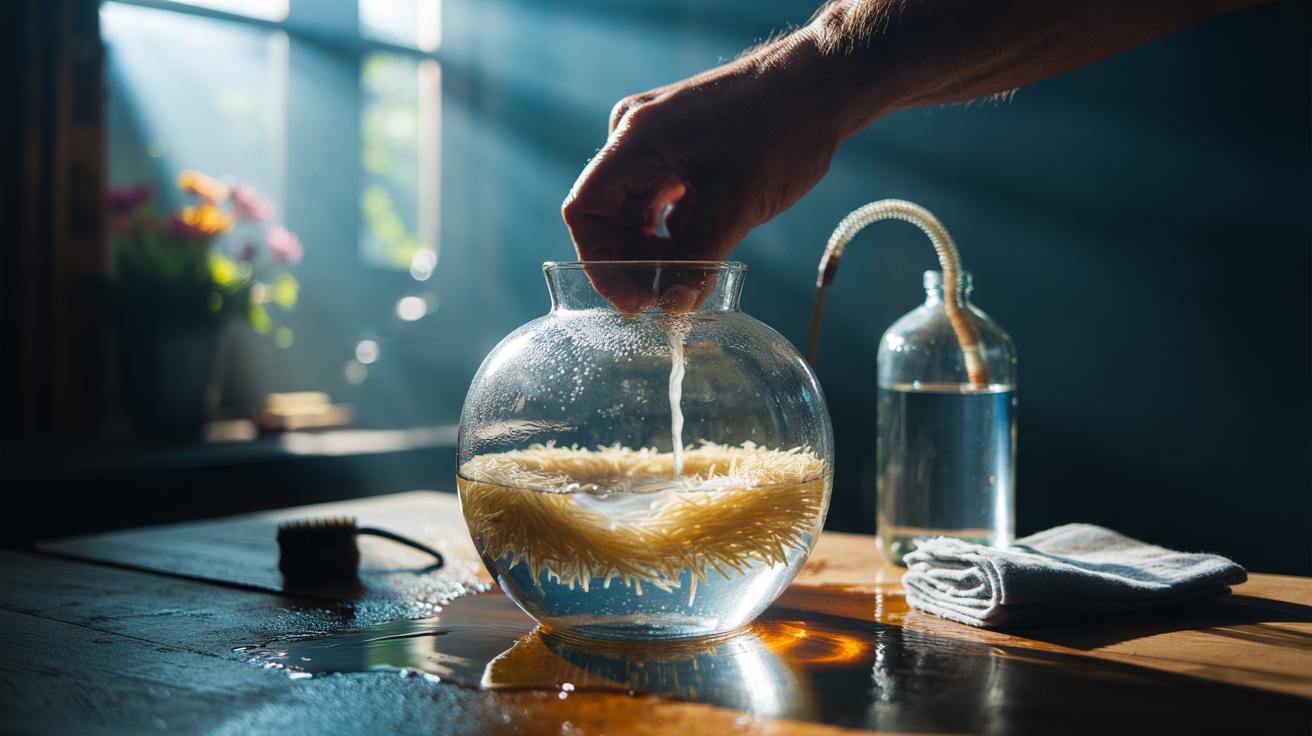
That milky haze on a favourite vase looks stubborn, but it’s usually just mineral residue clinging inside narrow curves where cloths and brushes can’t reach. A kitchen staple fixes it fast. Uncooked rice acts as a tiny army of scrubbers, slipping into tight necks and bulbous bases to dislodge limescale and grime. Add warm water and a dash of vinegar and you get gentle chemistry plus controlled abrasion. It’s a low-cost, low-effort trick that restores glass to a crystal-bright shimmer without harsh chemicals. The method is quick, surprisingly satisfying, and kinder to delicate pieces than scouring pads. Here’s how it works, and how to use it safely.
Why Rice Works on Cloudy Glass
Those cloudy streaks aren’t a permanent stain in most cases; they’re mineral deposits such as calcium carbonate left by hard water. Uncooked rice has small, rounded edges that create gentle abrasion. Swirled inside a vase with a little liquid, the grains move like a fluidised scrub, bumping into residue and prising it from the glass. The key is controlled friction: gritty enough to lift scale, mild enough to avoid gouging. Pair that with a splash of vinegar and you have acetic acid dissolving the carbonate bonds while the grains do the mechanical lifting.
There’s science behind the finesse. On the Mohs hardness scale, typical soda-lime glass outmatches softened rice, so scratches are unlikely when you swirl rather than grind. The motion matters. Short, energetic rotations create micro-vortices that carry grains into corners a brush can’t reach, especially under a fluted rim or at the base of a narrow neck. Micro-scrubbing dislodges deposits; the acid suspends them; a thorough rinse carries them away. Result: haze turns to sparkle in minutes.
Step-by-Step: Clear Your Vase in Minutes
Start with an empty, room‑temperature vase. Drop in 1–3 tablespoons of uncooked white rice (short- or medium‑grain keeps its shape). Add warm water to a third of the height and 1–2 tablespoons of vinegar. For heavy limescale, use a 1:1 mix of water and vinegar. Hold the neck, cover the opening with your palm, and swirl briskly for 30–60 seconds. Change direction. Tip and roll so grains sweep every surface. Don’t shake violently; swirl with intent. Let it sit for five minutes, then swirl again. Rinse well with warm water, inspect, and repeat if needed. Finish with a cold rinse to prevent spotting and dry upside down on a lint‑free cloth.
| Item | Purpose | Ratio/Amount | Time/Notes |
|---|---|---|---|
| Uncooked rice | Gentle abrasion | 1–3 tbsp | More for larger vases |
| Warm water | Fluid movement | 1/3 vase height | Not hot on cold glass |
| White vinegar | Dissolves limescale | 1–2 tbsp or 1:1 with water | Increase for heavy deposits |
| Swirl cycles | Dislodges residue | 2–3 rounds | 30–60 sec each |
Two tips. Use a funnel for tiny necks to avoid spills. For very narrow bud vases, a short piece of paper rolled into a cone helps add and remove grains cleanly. If you see sand-like grit or etching that doesn’t budge, the glass may be permanently etched, not dirty. In that case, rice won’t restore clarity, but it will still improve general brightness.
Safe Handling, Pitfalls, and Alternatives
Most everyday glass tolerates this method well, but use caution with delicate finishes. Avoid abrasive action on gold rims, painted details, iridescent coatings, or frosted surfaces; mask them or keep the swirl gentle and low in the bowl. With antique or lead crystal, limit vinegar to a mild solution and keep contact brief; rinse thoroughly. When in doubt, test the method in a small area first. Choose smoother, polished grains; short‑grain white rice tends to be softer and less likely to scuff than brown or wild varieties, which can be more fibrous.
If the haze is biofilm from flower food, a different tactic helps. Dissolve a denture tablet in warm water for an effervescent clean, then follow with a light rice swirl to finish the corners. Baking soda makes a useful abrasive paste on a soft cloth for wide openings. A flexible bottle brush can complement the rice for tall cylinders. To prevent new deposits, empty vases promptly, rinse with warm water, and dry inverted. A brief citric acid soak (½ tsp per cup of water) before storage keeps mineral build‑up at bay. It’s a cheap, eco‑friendly routine that saves sparkle and time.
A bag of rice, a splash of vinegar, and a minute of swirling: that’s all it usually takes to turn murky glass transparent again. The trick pairs simple chemistry with thoughtful mechanics, trading harsh scouring for gentle abrasion that reaches where cloths can’t. It’s fast, inexpensive, and kinder to your hands and the planet than bleachy brews. Next time flowers leave a ring or hard water fogs a treasured vase, you’ll have a reliable fix within reach. What other household standbys could you repurpose to clean smarter, not harder, around your home?
Did you like it?4.3/5 (29)