In a nutshell
- 🧪 Why it works: Vinegar’s acetic acid dissolves alkaline haze and soap scum, while newspaper’s dense fibres are lint-free and mildly polishing, delivering a streak-free shine without residues.
- 🕒 Two-minute method: Mix 1:1 vinegar-to-water (use distilled water in hard-water areas), mist lightly, wipe top-to-bottom then crosshatch, pause on splatters, buff with a dry section, and avoid flooding edges.
- 🧼 Troubleshooting: Persistent streaks often mean mineral-heavy water—switch to distilled; for limescale, warm vinegar and give 60 seconds of dwell; tackle hairspray fog with a pre-wipe; black edge specks are desilvering, not dirt.
- 🛡️ Safety and surfaces: Shield timber and keep acids off natural stone (marble, limestone, travertine); protect the mirror backing; apply solution to the cloth for antiques to prevent damage.
- ♻️ Cost and sustainability: Pennies per clean, fewer disposables, and reusable bottles; scent the solution with citrus (well strained), and swap newspaper for brown paper or coffee filters if ink-sensitive.
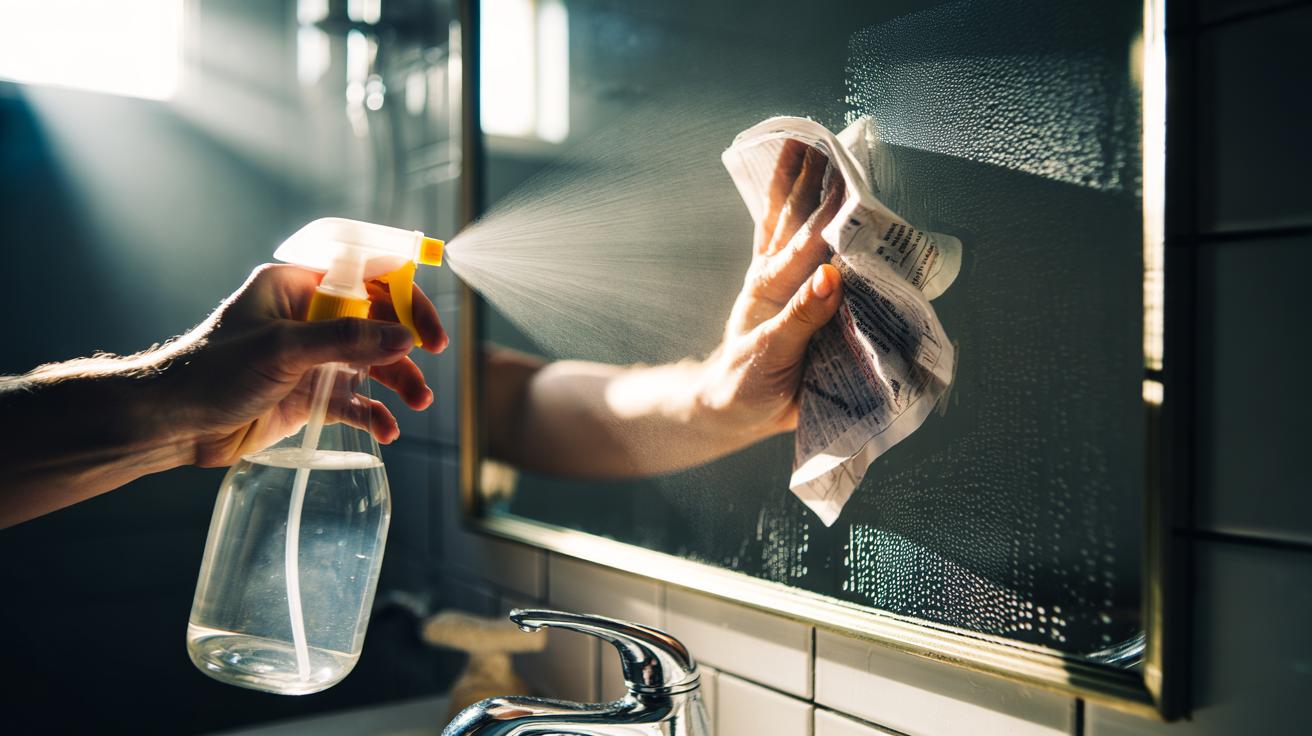
When a mirror looks tired, shop-bought sprays often promise sparkle yet leave a film you notice the moment daylight strikes. There’s a quicker, thriftier fix hiding in most kitchens. Vinegar and newspaper. No gadgets. No fuss. In under two minutes, this old-school pairing strips away greasy fingerprints, toothpaste flecks, and cloudy mineral haze. The secret isn’t magic; it’s chemistry and fibre. For a streak-free finish fast, you need mild acid and a lint-free wipe. What follows explains why the combo works, how to do it without mess, and the smart tweaks professionals rely on when bathroom steam, hairspray overspray, or hard water make glass stubborn.
Why Vinegar and Newspaper Beat Sprays
Commercial glass cleaners often contain surfactants and fragrance. They smell pleasant but can leave residues that smear once the mirror warms from shower steam. White vinegar, powered by acetic acid, dissolves alkaline films, soap scum, and light limescale. It cuts through those hazy halos around the basin without depositing anything glossy or sticky. Newspaper does the rest. Made from dense, short fibres, it’s naturally lint-free and slightly abrasive in a good way, so it polishes rather than drags. Modern inks are largely soy-based, so transfer is rare. The result is a crisp, reflective surface that looks truly clean, not perfumed.
| Key Point | Details |
|---|---|
| Mix Ratio | 1:1 white vinegar to water (use distilled water in hard-water areas) |
| Best Wipe | Crumpled newspaper; backup: clean microfibre cloth |
| Time Needed | About 2 minutes for an average bathroom mirror |
| Avoid | Overspray on marble, limestone, or travertine; damaged mirror edges/backing |
There’s an environmental bonus too. A reusable spray bottle plus recycled newsprint means fewer disposable wipes and less plastic. Costs tumble: pennies per clean. And because vinegar evaporates cleanly, any shine you see is from glass, not a coating. Less product, fewer strokes, better clarity. That’s why professional window cleaners quietly lean on the same principle, even if their bottles aren’t labelled “vinegar”.
Two-Minute Method: Step by Step
Stage your kit first. Fill a trigger bottle with a 1:1 vinegar-to-water mix; use distilled water if taps leave white spots. Tear a sheet of newspaper, crumple it into a loose ball, then crumple again to soften edges. Open a window or switch on the extractor. Light misting is the trick—too much liquid equals streaks. If the frame is timber, drape a small towel over it to catch drips and protect the finish.
Spray from top to bottom in three quick passes, keeping the nozzle 20–30 cm from the glass. Start wiping at the top-left corner with firm, overlapping strokes. Go down in vertical lines. Then switch to horizontal passes to crosshatch—this reveals any missed patches immediately as the light shifts. For stubborn toothpaste darts, pause the paper on the spot for five seconds; the vinegar softens the crust, the fibres lift it cleanly. Don’t flood the edges where mirror backing can be vulnerable.
Finish with a dry section of newspaper. Buff in quick zigzags until the glass squeaks. If you see a faint smear, it’s usually excess solution; one more dry pass clears it. On very grimy mirrors, add a pinhead of washing-up liquid to the bottle, but buff longer to avoid surfactant haze. Done right, you’ll hit crisp, bright reflection in under two minutes.
Troubleshooting, Safety, and Smart Tweaks
Streaks persisting? Check your water. Minerals in tap water dry as dull spots. Swap to distilled water and the problem often vanishes. If you’ve over-sprayed, you’ll chase smears forever; spray the paper instead and wipe, then finish with a dry sheet. Hairspray fog leaves a resinous veil; pre-wipe with a barely damp microfibre, then do the vinegar pass. Use less liquid than you think—polish beats puddles.
Hard-water ghosting on the lower pane needs patience. Warm the vinegar slightly, spritz the area, and press a folded paper towel on the spot for 60 seconds before your newspaper pass. Still visible? A second cycle usually clears it. Black speckles around the edge indicate desilvering—that’s damage to the backing, not dirt. Cleaning won’t cure it, so avoid soaking edges to prevent it spreading. If the frame is stone, shield it; acids etch marble and limestone quickly.
Sensitive to ink? Use plain brown paper or an unbranded coffee filter. Prefer a fresher scent? Infuse vinegar with citrus peels for a week, then strain thoroughly to remove oils that could smear. Keep a tiny bottle in the bathroom for quick touch-ups; one mist, one buff, done. For antique mirrors, choose a soft, clean microfibre and the same solution, applying to the cloth, not the glass. Respect the backing, respect the frame, and the gleam lasts longer.
A mirror that truly shines changes the mood of a room. It bounces light, sharpens lines, and makes spaces feel ordered. The vinegar-and-newspaper method wins because it’s fast, cheap, and reliable, but it’s also forgiving—you can adapt it to tough marks, delicate frames, or heavy steam. Acid dissolves, fibre polishes, and the glass looks like glass again. Armed with a spray bottle and yesterday’s paper, you’re two minutes from clarity. What small ritual will you adopt to keep that hard-won gleam week after week?
Did you like it?4.6/5 (29)