In a nutshell
- 🍋 Use lemon zest and steam to purge microwave odours in about five minutes, as aromatic oils like limonene and citral dissolve greasy films and neutralise smells.
- ⚙️ Practical method: bowl of water + generous zest (and slices), heat 3 minutes, rest 2, then wipe; optional bicarbonate boosts cleaning, and a wooden stick helps prevent superheating.
- 🔬 The science: limonene dissolves fats, citral modulates nitrogen/sulphur notes, mild acidity shifts pH, and steam carries and condenses oils onto every surface.
- ⚠️ Safety first: use a vented, microwave-safe container, avoid metal and sealed lids, handle hot bowls carefully, and run plain water first if chemical cleaners were recently used.
- 🔁 Variations and limits: add orange peel for allium smells, a splash of vinegar for burnt residues, clean turntable parts separately, and note limitations with absorbed plastics or hidden char.
Lemon peels promise a curious kind of kitchen alchemy. In a few minutes, a tired microwave can lose the lingering bouquet of last night’s curry or reheated fish. The secret isn’t mysticism. It’s chemistry, heat, and a fleet of volatile terpenes. When zest meets steam, aromatic oils move quickly, binding to odour molecules and lifting greasy residues that hold on to smells. The technique is fast, gentle, and surprisingly effective for routine refreshes. And unlike synthetic sprays that mask rather than treat, citrus compounds get to the source. Consider this your five-minute fix, with a dash of science and a squeeze of practicality.
Why Lemon Zest Works
Lemon zest isn’t just yellow decoration. It’s a densely packed reservoir of limonene, citral, and other terpenes. These compounds are volatile, meaning they evaporate readily when warmed, so they can permeate tight spaces. Once airborne, they encounter odorous molecules—amines from fish, sulphur notes from brassicas, stale fats oxidised by heat—and disrupt them. Volatile oils don’t merely perfume the space; they interact, solvate, and displace. Limonene, being lipophilic, dissolves greasy films on the microwave’s walls, the very films that trap unwanted odours over time.
Citrus acidity helps too. A cup of lemony water nudges surface pH slightly downward, discouraging some malodour-producing microbes and loosening proteinaceous smears. The microwave contributes a final advantage: rapid generation of warm vapour. Steam is a superb carrier gas; it spreads those aromatic oils evenly and condenses on cool walls, delivering a thin, active layer to every corner. The result is a two-pronged effect—chemical neutralisation and physical lift-off of residues. For light to moderate smells, that’s often enough to reset the cavity without harsh detergents or scrubbing.
A Five-Minute Method That Actually Delivers
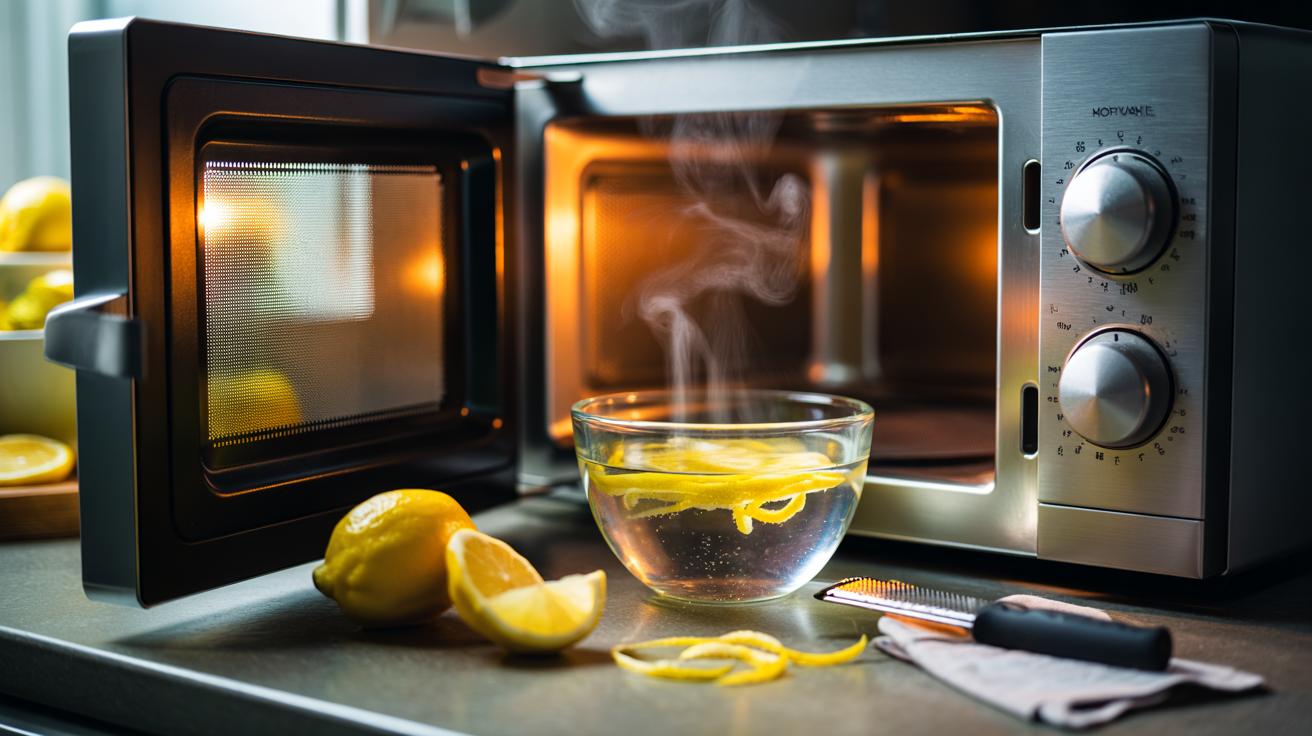
Use a microwave-safe bowl. Half-fill with water. Add a large handful of fresh lemon zest or the peel from one lemon, plus two slices for extra juice. Optional: a teaspoon of bicarbonate of soda to boost cleaning if the interior is sticky. Drop a wooden stir stick or bamboo skewer into the bowl to reduce the risk of superheating. Heat on high for 3 minutes, until vigorously steaming. Leave the door closed for 2 more minutes; let vapour and oils circulate and condense.
Open carefully. Remove the bowl with oven gloves. Wipe the interior with a soft cloth, starting at the ceiling where condensate collects. Stubborn patches? Reapply the hot liquid to a cloth and press for 20 seconds. The odour should have flattened dramatically. If you’re dealing with strong fish or curry residues, repeat once. This is still a five-minute reset, not a weekend scrub. And because the solution is mostly water and peel, it’s inexpensive, food-safe, and kind to plastics and enamels that dislike solvent-heavy sprays.
From Chemistry to Clean: How Aromatic Oils Neutralise Odours
Odours persist when molecules cling to films, pores, and micro-textures. Citrus oils tackle this on several fronts. First, limonene’s non-polar structure mingles with oxidised fats, thinning and mobilising them. Second, compounds like citral can react with certain nitrogen- and sulphur-based volatiles, reducing their perception. Third, warm steam lifts and dilutes. Neutralisation is part chemistry, part transport. You don’t need huge concentrations—just consistent contact, which condensation provides.
Compared with plain water, a zest infusion brings power with gentleness. It doesn’t etch enamel like aggressive acids, and it leaves a light, clean note that dissipates within an hour. For readers who enjoy the specifics, here’s a quick snapshot of key players and what they do.
| Compound/Factor | Primary Action | Best For | Notes |
|---|---|---|---|
| Limonene | Dissolves greasy films | Fatty, oxidised odours | Found in zest oil sacs |
| Citral | Odour modulation | Fishy and sulphur notes | Synergises with mild acidity |
| Steam | Carrier and condenser | Even distribution | Enables contact on cool walls |
| Mild Acidity | pH shift, loosens grime | General stale smells | From lemon juice and peel |
Safety, Variations, and When It Won’t Work
Microwaves heat water unevenly, so think safety first. Always use a vented container and include a wooden stirrer to seed bubbles. Never seal the bowl, and never add metal or foil. Handle the hot bowl with care, and crack the door before leaning in; escaping steam can scald. If you’ve recently used strong chemical cleaners, run a plain water steam cycle first to remove residual fumes before introducing citrus oils.
Variations help depending on the problem. For onion or garlic, add a strip of orange peel to broaden the terpene profile. For smoky, tarry notes from burnt spills, a second cycle with a teaspoon of white vinegar in the water can cut polymerised residues before your lemon pass. Persistent odours sometimes signal hidden grime: a splattered top vent, a neglected turntable roller ring, or a porous, cracked plate. Clean those parts separately with warm, soapy water. If smells survive two cycles and a wipe-down, look for a charred spill under the turntable or a tired door seal—sources that need physical removal, not just aroma chemistry.
Lemon zest won’t rebuild a scarred cavity or reverse plastic absorption, but it will reset everyday odours with minimal effort. In five minutes, you get a fresher machine, ready for porridge, leftovers, or a quick mug cake. The method scales, too—half a lemon for a compact model, two for larger family units. Simple kit, small cost, high impact. If your microwave could talk, would it ask for a weekly citrus spa, or only when the curry memories start to linger?
Did you like it?4.6/5 (20)