In a nutshell
- 🔬 How it works: citric acid uses chelation to lift calcium, iron, and soap films from stainless steel, while brief contact preserves the metal’s passive layer and restores shine.
- 🍋 Two methods: scrub with a lemon half (optionally dipped in caster sugar) for spots, or use a warm 5% citric solution for batches; rinse and dry within two minutes for best results.
- 🧽 Prep and finish: degrease first so acid reaches tarnish, then buff with a microfibre cloth to prevent new water marks and lock in that crisp gleam.
- ⚠️ Safety and limits: avoid prolonged contact with silver, carbon steel, and wooden handles; avoid salt on stainless; for stubborn haze, test a short, stronger (10%) citric dip.
- ✨ Why choose lemon: it’s low-cost, low-waste, food-safe, and fast—science-backed cleaning that revives tired cutlery and beats harsh chemicals for everyday maintenance.
British drawers are full of stainless steel spoons and knives that have lost their sparkle to tea tannins, tomato acids, and hard-water haze. A simple lemon can reverse that story in minutes. Slice, scrub, rinse, done. The secret isn’t folklore; it’s chemistry. Inside that citrus is citric acid, a natural chelator that grabs hold of tarnish-forming ions and lifts them cleanly from metal. The method is low-cost, low-waste, and pleasantly aromatic. Used correctly, it’s fast, safe for food-contact surfaces, and surprisingly thorough. Here’s how the lemon scrub works, how to use it deftly, and when a citric acid solution is the smarter choice for stubborn, widespread discolouration.
How Citric Acid Breaks Down Tarnish on Stainless Steel
Stainless steel keeps its shine thanks to a microscopically thin film of chromium oxide called the passive layer. That layer is resilient, but life in a British kitchen throws curveballs: limescale from hard water, iron residues from older dishwashers, clingy food pigments, and soap scum that dulls reflectivity. Tarnish rarely means the steel has corroded; it’s usually a surface veil of mineral deposits, organic stains, or adsorbed ions obscuring the gloss.
This is where citric acid excels. It’s a tricarboxylic acid that forms stable complexes with calcium and iron, a process known as chelation. That chelation dissolves limescale film and loosens iron-based smuts, while the mild acidity (typically pH 2–3 on contact) breaks down alkaline soap residues. The result is rapid detachment of the very film that scatters light and makes cutlery look tired.
Crucially, brief acid contact doesn’t strip the stainless surface. Short, controlled exposure leaves the chromium oxide intact and can even refresh it once rinsed, as oxygen in air restores the passive layer. Because lemons contain natural oils and water, they spread evenly and carry the acid into crevices where a cloth often fails.
What about silver or carbon steel? Different story. Silver tarnish is sulphide-based and needs another approach; carbon steel will rust if you blink. But on genuine stainless flatware, citric acid’s gentle bite, swift rinse, and thorough dry is a chemistry-backed route to shine without harsh bleaches.
Step-by-Step Lemon Scrub: From Dull to Dazzle in Minutes
Set up your kit: a fresh lemon (or bottled lemon juice), a soft sponge or microfibre, and a dry tea towel. If the cutlery is greasy, wash first in hot soapy water and rinse. Degreasing matters—oil blocks the acid from reaching the tarnish.
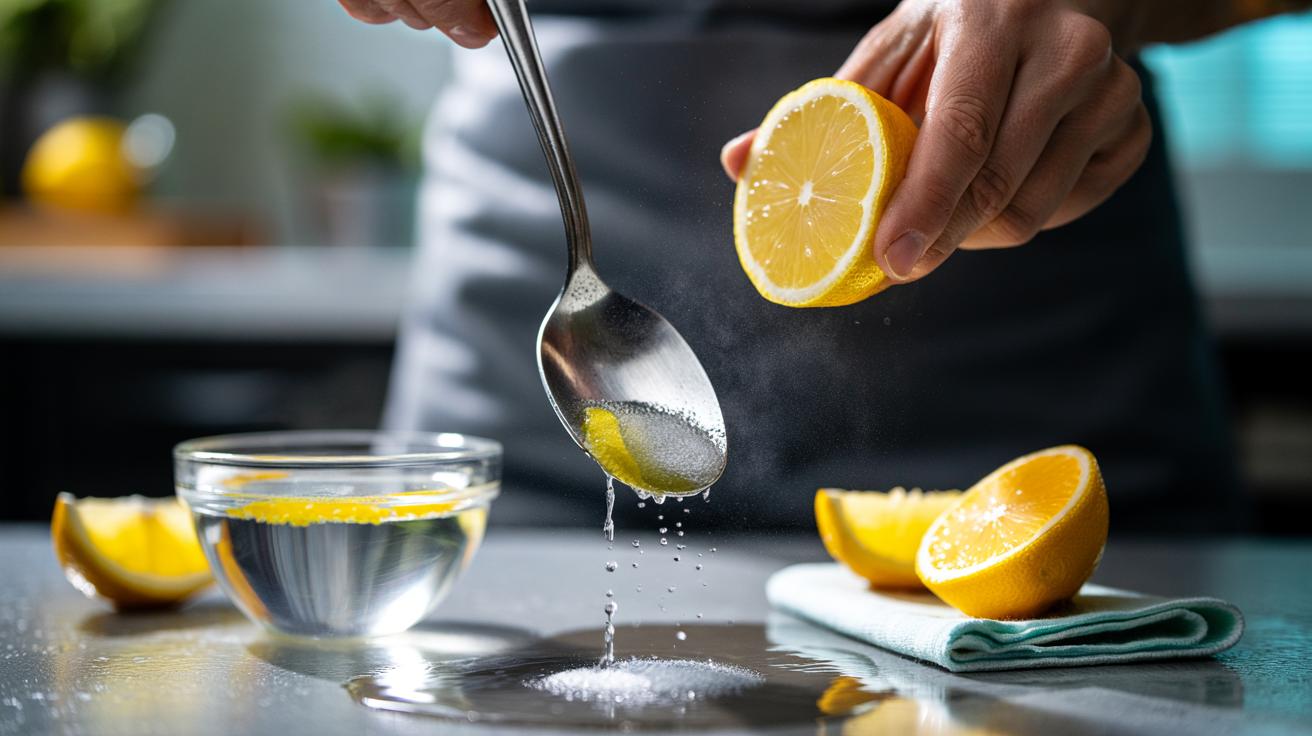
Method one, the classic: halve a lemon and dip the cut face in fine caster sugar. The sugar gives a gentle, chloride-free mechanical lift. Rub along each piece, edge to tip, for 30–60 seconds. You’ll see the metal brighten almost immediately. For knife serrations and fork roots, squeeze a little juice and work it in with a soft brush.
Method two, the precise option: dissolve citric acid powder (food grade) at 5% by weight in warm water. Either wipe each piece with a soaked cloth or immerse for 2–3 minutes. Agitate briefly, then rinse vigorously. This is ideal for sets dulled by dishwasher haze after a big dinner.
Whichever route you choose, the finish matters. Rinse thoroughly within two minutes and dry completely to prevent new water spots. A quick buff with a microfibre cloth restores that snappy showroom gleam. Avoid coarse salt on stainless—chloride ions can promote pitting if left lingering. If you must use salt, keep contact brief and rinse immediately.
Safety, Materials, and When to Choose Powdered Citric Acid
Citric acid is kinder than many household cleaners, yet technique counts. Protect glued or wooden handles from prolonged soaking. Keep lemon and citric solutions away from carbon steel blades and silver-plated heirlooms. If your dishwasher has been leaving a rainbow film, the cause may be detergent overdose or rinse-aid issues; a citric cycle can clear films, but you’ll still need to adjust settings.
For clarity, here’s a simple guide to ratios, contact times, and cautions:
| Item | Role | Ratio/Method | Contact Time | Notes |
|---|---|---|---|---|
| Lemon half | Direct scrub, spot lift | Rub cut face; add caster sugar for mild abrasion | 30–60 seconds | Rinse and dry immediately |
| Citric solution | Batch de-hazing | 5% w/w in warm water | 2–3 minutes | Avoid soaking wooden handles |
| Bicarbonate | Pre-degrease, optional neutralise | Light paste for wash; rinse before acid | — | Don’t mix directly; fizz reduces acidity |
| Microfibre cloth | Final polish | Firm buff after drying | 15–30 seconds | Prevents new water marks |
When stains linger after scrubbing, step up to a 10% citric solution, but shorten contact to one minute and test on an inconspicuous piece. Discolouration caused by heat tint or knife-edge work-hardening won’t be erased by acid; that’s a polishing job. For daily care, a quick hot wash, soft rinse, and immediate towel dry will keep the passive layer pristine and make the next lemon session blissfully short.
In a world of foaming cleaners and brash claims, the humble lemon earns its keep with science as well as scent. Citric acid cuts the film; a conscientious rinse and dry lock in the lustre. It’s cost-effective, food safe, and satisfying—you can watch the shine return in real time. Next time your stainless looks grey and weary, reach for the fruit bowl before the chemical aisle. Two minutes of mindful scrubbing can outshine a cycle of harsh detergents. Which piece in your kitchen drawer deserves a citrus rescue first, and how will you document the transformation?
Did you like it?4.7/5 (29)