In a nutshell
- 🧲 The dryer sheet hack works by lowering surface resistivity with cationic agents, dissipating static so dust is repelled instead of re-attracted to TV screens.
- 🧼 Step-by-step: power off and cool the set, use a used dryer sheet with light, overlapping strokes, then buff with a dry microfiber; for smudges, dab distilled water—never spray liquids.
- 🧰 Tools at a glance: dryer sheet = top static control and speed; dry or damp microfiber = best for fingerprints; anti-static wipes = reliable but pricier; paper towels = avoid due to scratching and lint.
- ⚠️ Safety first: some OLED/QD-OLED and matte coatings dislike residues—choose unscented sheets, test on the bezel, and follow the manual; use no harsh chemicals and minimal pressure.
- ✅ Real-world payoff: a quick anti-static pass keeps screens clearer for longer, cuts repeat cleanings, and pairs well with weekly maintenance and room dust reduction (HEPA vacuuming).
Dust loves TV screens. It clings, it smears, and it often seems to reappear minutes after you’ve cleaned. A simple household fix is hiding in your laundry drawer: the humble dryer sheet. Thanks to its anti-static chemistry, a light pass can lift fluff while reducing the electrostatic attraction that draws particles back. The result is a clearer picture and fewer repeat wipes. Use a used sheet for a softer touch and less residue, and work with the set powered down. One minute of careful dusting can delay dust’s return for days, making this hack both quick and surprisingly effective.
How Dryer Sheets Tame Static on Screens
Television panels and bezels are largely plastic, classic insulators that build up charge during everyday use and cleaning. That static field attracts airborne particles, pulling them onto the surface like iron filings to a magnet. Dryer sheets change the equation. They’re coated with cationic surfactants and lubricants that transfer a whisper-thin film to surfaces, lowering surface resistivity and dissipating charge. A tiny bit of moisture adsorption helps create a conductive path for static to leak away. Neutralize the charge; stop the dust.
There’s a second benefit. The sheet’s soft fibers physically sweep away lint while that conditioning layer reduces friction that would otherwise create new static, especially on matte coatings. Instead of the frustrating cycle—wipe, charge, re-attract—the field stabilizes. Dust falls away or never lands. That’s why a screen treated this way often looks cleaner for longer. For the best balance of pickup and low residue, favor a lightly worn sheet: the anti-static agents remain, but the stronger softeners are diminished.
Step-by-Step: The Dryer Sheet Dusting Hack
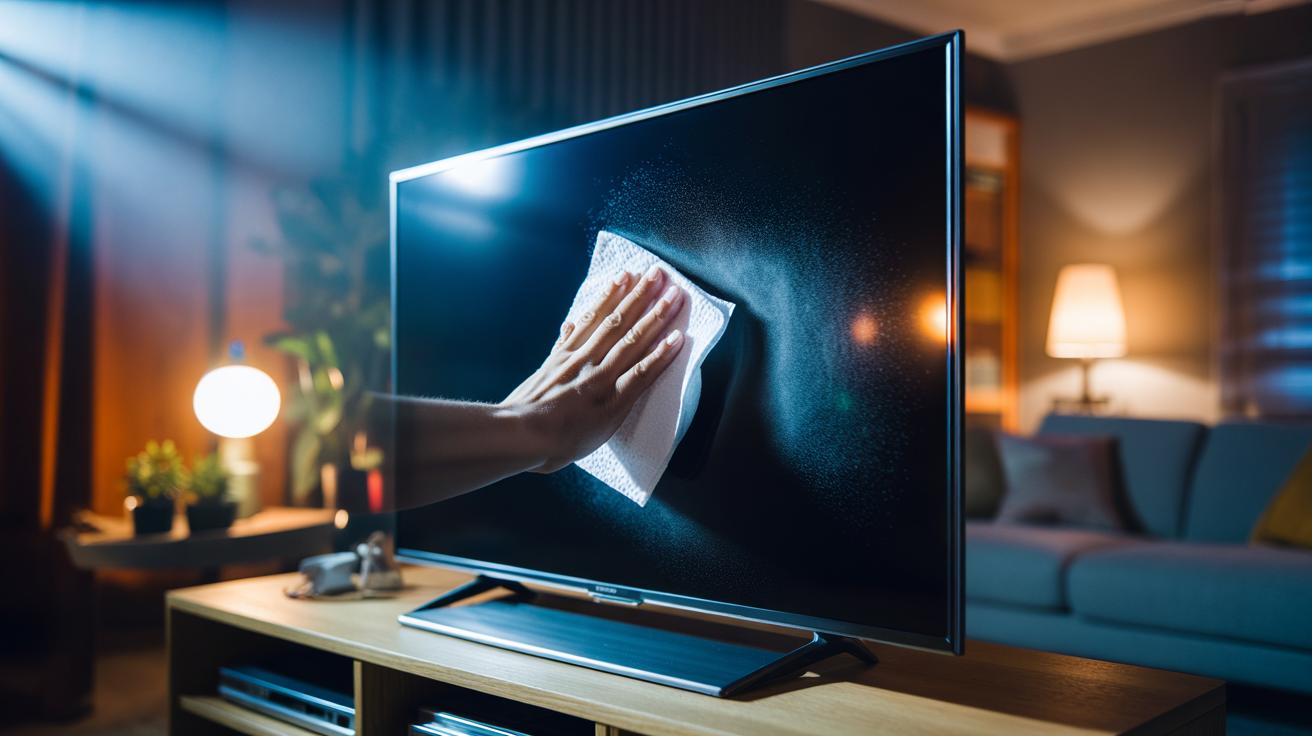
First, switch the TV off and let it cool. Cooler panels show dust better and shed charge more readily. Lightly hold a used dryer sheet—not a fresh, oily one—and make slow, overlapping passes from top to bottom in an S pattern. Avoid pressing on the panel; let the fibers do the work. Gentle strokes lift dust without grinding residues into delicate coatings. Pay attention to the bezel and stand where static builds fastest. For vents and ports, fold the sheet and skim the grilles without pushing lint inside.
Once dust is removed, follow with a clean, dry microfiber to buff any faint film. Stubborn smudges? Dampen a microfiber slightly with distilled water and dab, then re-apply the dryer sheet lightly to re-establish the anti-static layer. Never spray liquids on the screen. Keep glass cleaners, alcohol, and ammonia away from modern panels and anti-glare coatings. Finish by discarding the sheet; don’t reuse indefinitely, as its effectiveness fades and fibers can shed. Most people find a weekly quick pass maintains clarity, with a deeper clean monthly if fingerprints are an issue.
What Works Best on TV Screens
Different tools shine in different situations. The right choice depends on whether your priority is static control, streak-free optics, or deep cleaning. Use the guide below to match the task to the tool. Choose anti-static when dust is the enemy; choose damp microfiber when fingerprints rule.
| Tool | Static Control | Streak Risk | Residue Risk | Best For |
|---|---|---|---|---|
| Used Dryer Sheet | Excellent | Low | Low–Medium | Quick dusting, prevention |
| Microfiber (Dry) | Moderate | Low | None | Routine wipe-downs |
| Microfiber (Slightly Damp, Distilled) | Good | Low–Medium | None | Smudges, fingerprints |
| Anti-Static Screen Wipe | Excellent | Low | Low | Premium panels, offices |
| Paper Towel | Poor | High | Fiber shedding | Not recommended |
For everyday dust, the dryer sheet wins on speed, cost, and static suppression. For visible oils, step up to a barely damp microfiber, then re-pass with the sheet to restore dust resistance. Specialty wipes are reliable but pricier. Avoid paper products; they can micro-scratch coatings and build more static than they remove.
Safety, Residue, and When to Skip the Hack
Not all screens are equal. Premium OLED, QD-OLED, and matte anti-glare finishes can be sensitive to residues, including fragrances and softening agents. If your TV’s manual prohibits conditioners, skip the sheet and rely on microfiber with distilled water. When you do use the trick, pick an unscented or already-used sheet and test on the bezel first. If you see streaks or a rainbow sheen, stop and switch methods. Never scrub, and never clean a hot panel. Power down, and if you’re handling older CRT equipment, disconnect and allow static to dissipate.
Consider your environment too. Households with heavy dust—pet hair, renovation debris—benefit from the anti-static layer because it reduces re-attraction between full cleans. But in humid rooms, charge naturally bleeds off, so a simple dry microfiber may suffice. If allergies are a concern, finish with a HEPA vacuum of the room; less airborne dust equals cleaner screens. The golden rule holds: no harsh chemicals, no direct sprays, minimal pressure, and slow, consistent motions that respect the panel’s delicate surface.
A dryer sheet is a small tool with outsized impact, taming static so dust won’t boomerang back to your TV screen moments after you’ve cleaned. The hack is fast, cheap, and surprisingly elegant when used with a light touch and a follow-up microfiber buff. It’s not a cure-all for fingerprints, nor a replacement for manufacturer guidance, but it’s an excellent first line of defense against fluff and haze. Keep it gentle, keep it dry, keep it anti-static. What’s your current screen-cleaning routine, and where could a targeted anti-static pass save you time each week?
Did you like it?4.5/5 (24)