In a nutshell
- 🍌 Banana peels contain natural oils, light waxes, and polysaccharides that refill micro-abrasions, reduce light scatter, and revive leather lustre for a supple patina.
- 🧽 Method: dry-brush dirt, wipe with the peel’s inside in small circles using light pressure, rest 5–10 minutes, then buff vigorously to remove residue and even the shine.
- ⚠️ Use wisely: avoid suede, nubuck, delicate aniline, and very pale leathers; test first, don’t soak, and keep residue out of stitching and linings.
- ♻️ Perks: low-cost, low-waste refresh that extends time between full conditioning and polishing—ideal for quick commuter scuff fixes and travel.
- 🔍 Choice guide: banana wipe = natural sheen and convenience; commercial polish = higher finish and deeper protection—select based on the occasion and desired gloss.
It’s the sort of tip that sounds like folklore until you try it: a simple banana peel can make tired leather shoes gleam again. The inside of the peel holds natural oils, gentle wax-like compounds, and a whisper of moisture that collectively coax back the shoe’s lustre. No harsh solvents. No synthetic shine boosters. Just a fruit skin most of us throw away. Done well, it softens scuffs and deepens colour without leaving a sticky film. Test first on an inconspicuous spot and you’ll see how the peel’s slick interior glides, feeds, and buffs. It’s practical. It’s sustainable. And it’s surprisingly effective.
How Banana Peels Restore Leather Shine
At the heart of the hack is chemistry you can feel under your fingertips. The inner peel carries a cocktail of lipids, trace waxes, and polysaccharides that behave like ultra-light conditioners, slipping into the leather’s surface and filling micro-abraded valleys. That faintly slippery film reduces light scatter, so the shoe reflects more evenly and looks richer. There’s also potassium and antioxidant pigments such as lutein; while they don’t dye the leather, they help counter a dull, greyed cast caused by grime and oxidation. The result isn’t a mirror gloss, but a revived, supple patina that reads as cared-for rather than coated.
The peel’s delicate fibres add a mild polishing effect. Think of them as a soft, biodegradable pad that loosens surface dirt while the oils do the feeding. Moisture matters, but balance matters more. Too wet, and leather swells and stains; too dry, and you’ll barely move the needle. Aim for a ripe, spotted banana—its interior is slick but not watery. Never use this technique on suede or nubuck; the nap will mat and darken. Finished, smooth calf, pebble grain, and corrected grain typically respond best.
Consider it first aid, not surgery. A peel can refresh shoes between proper care sessions, but it won’t repair deep cracks, salt lines, or flaking topcoats. For those, reach for a dedicated cleaner and conditioner. Used judiciously, the peel extends intervals between polishes, which saves money and trims chemical load without sacrificing everyday elegance.
Step-by-Step: The Banana Peel Wipe Method
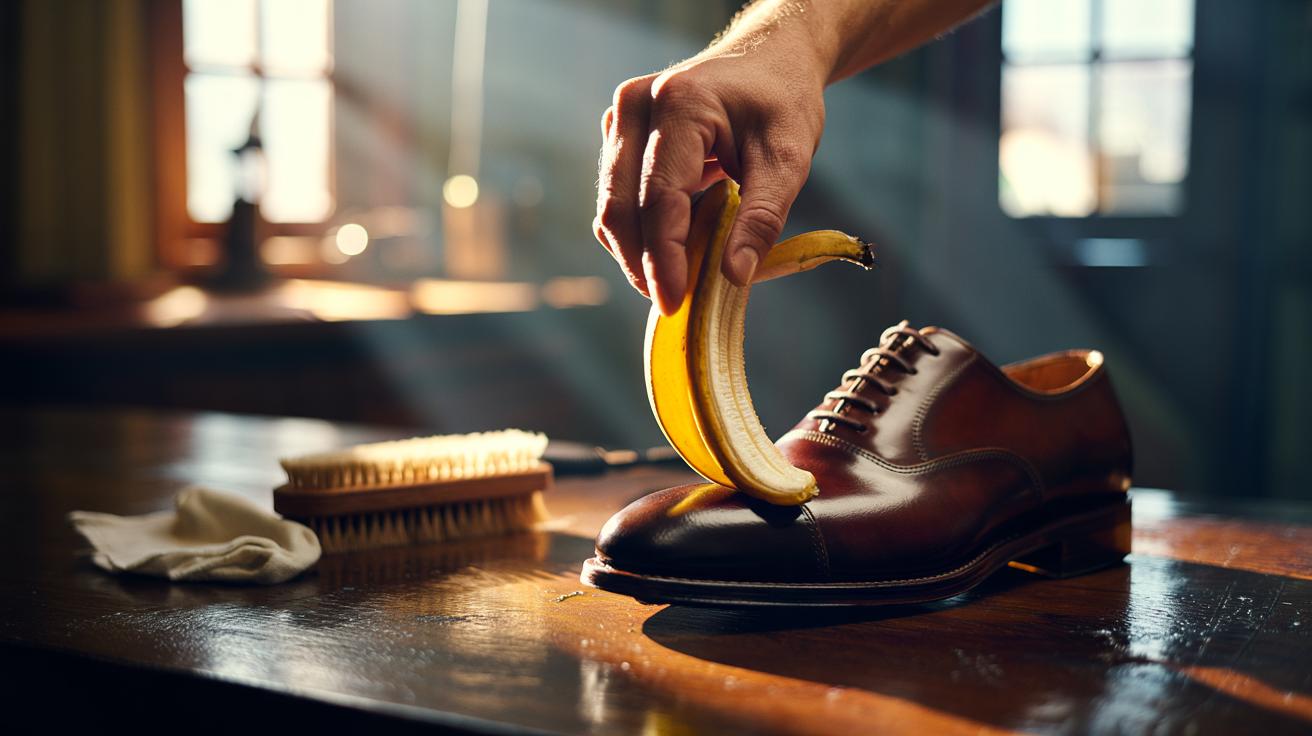
Preparation sets the tone for success. Start by dry-brushing away grit with a soft horsehair brush; grinding dirt into the leather is the surest way to create new scratches. Peel a ripe banana and use the inside of the skin as your applicator, folding it to make a firm, slightly cushioned pad. Work in small circles, light pressure, and short passes. You’re laying down a whisper-thin film, not frosting a cake. Pay special attention to toe caps and quarters where scuffs bloom. If the peel feels watery, dab it on a tissue before touching the shoe.
Pause and let the oils settle for five to ten minutes. Then buff thoroughly with a clean, soft cloth—old cotton T-shirts are perfect—until the surface feels dry and looks even. If you see streaks, keep buffing; they’re just unabsorbed residues. For extra pop on dress shoes, finish with a touch of neutral beeswax polish on the toe and heel, but it’s optional. Frequency? Once between proper polishes is ample. Over-application risks build-up that attracts dust.
- Tip for light colours: Work even lighter and test first; some peels can slightly deepen shade.
- Stitching and welts: Wipe, don’t saturate, to avoid softened threads and trapped residue.
- Odour control: Buff until neutral; any banana scent fades as oils flash off.
- Storage: Let shoes air for an hour before boxing to prevent stale moisture.
When to Use It, When to Avoid It
This trick shines—literally—on commuter scuffs, travel touch-ups, and days when your kit is miles away. It’s a boon for busy professionals, students, and anyone who prizes low-waste care. But discernment keeps it safe. Avoid delicate aniline leathers that spot easily, pale cream shoes that show the slightest hue shift, and any finish that’s cracked or flaking. Those surfaces need targeted products. If your pair carries elaborate broguing, be meticulous with your buffing so residue doesn’t lodge in perforations. And always keep peels off linings to prevent clammy interiors.
Think of banana peels as a companion to, not a replacement for, proper conditioning. Every few months, deep clean, feed with a balanced leather balm, and then polish to seal. Use the peel between those milestones when travel, cost, or time make a full routine impractical. Below is a quick comparison to help you choose the right moment.
| Aspect | Banana Peel Wipe | Commercial Polish |
|---|---|---|
| Cost/Convenience | Free if you have a banana; fast | Low cost; requires kit and time |
| Finish | Natural lustre, soft sheen | High, controllable gloss |
| Conditioning | Light surface feeding | Deeper nourishment with wax/oil blend |
| Risks | Possible slight darkening; residue if unbuffed | Build-up, cracking if overused |
| Suitability | Smooth leathers, day-to-day refresh | Dress shoes, long-lasting protection |
In a world saturated with products, the humble banana peel proves that simple chemistry and careful technique can carry you far. It’s thrifty. It’s cleaner. It turns a kitchen scrap into a quick-care ally that keeps leather lively between deeper treatments. Just respect the boundaries—no suede, no soaking, always buff—and pair it with periodic professional-grade maintenance for longevity. The question now is practical and personal: will you let a piece of fruit skin share space with your brush and cloth, and if you do, which pair in your wardrobe will you revive first?
Did you like it?4.6/5 (30)