In a nutshell
- ⏱️ Restore tile shine in 2 minutes with a baking soda paste; gentle abrasion plus mild alkalinity lifts soap scum and oils without scratching glaze.
- ⚗️ Mix 3:1 baking soda to water, spread a thin layer for 60–120 seconds, rub in small circles, then rinse and buff with a microfibre cloth for glassy gloss.
- 🧱 Target trouble spots: apply a thicker line on grout and agitate with a soft toothbrush; for light limescale, remove paste, then mist vinegar sequentially (never mixed).
- 🛡️ Safety first: patch test, wear gloves, ventilate; avoid marble, limestone, and some cement tiles; use lighter pressure on plastics; never combine vinegar with peroxide or bleach.
- 🧰 Smart tweaks: add one drop washing-up liquid for better wetting; a teaspoon of 3% hydrogen peroxide can brighten grout; skip coarse powders—let the paste do the work.
Bathroom tiles lose their sparkle fast. Steam, soap, and hard water conspire to leave a cloudy film that deadens shine and grips grime. Enter the simplest fix on the shelf: a humble baking soda paste. In two minutes, it can lift residue, neutralise odour, and restore lustre without harsh fumes or scratched glaze. The trick is understanding why mild abrasives work and how to use them with precision. When the paste is mixed right and wiped promptly, shine returns quickly with minimal elbow grease. This is low-cost, low-tox cleaning that respects your surfaces and your lungs, yet still delivers that hotel-bathroom gleam.
Why Mild Abrasives Work on Tiles
Not all scrubbing is equal. Sodium bicarbonate crystals are soft, round-edged, and water-friendly, which makes them a gentle mechanical cleaner. On the Mohs scale they sit well below the hardness of glazed ceramic, porcelain, and glass, so they abrade residue rather than your tile. Think of it as micro-sanding of soap scum, body oils, and toothpaste binders. The particles break apart as you rub, preventing the deep gouges you might get from harsher powders. It’s this controlled friction that boosts shine without the risk profile of aggressive scouring.
There’s chemistry, too. Baking soda is mildly alkaline, so it softens fatty acid films and buffers odours. Unlike bleach, it won’t gas your bathroom. Unlike strong acids, it won’t etch enamel. That matters if you’ve paid for a high-gloss glaze. The paste also suspends loosened grime, making it easier to wipe away in one pass with a damp microfibre cloth. Results are quick. Two minutes often suffices because most bathroom build-up is thin, widespread, and responsive to light abrasion paired with a bit of dwell time.
How to Mix a Two-Minute Baking Soda Paste
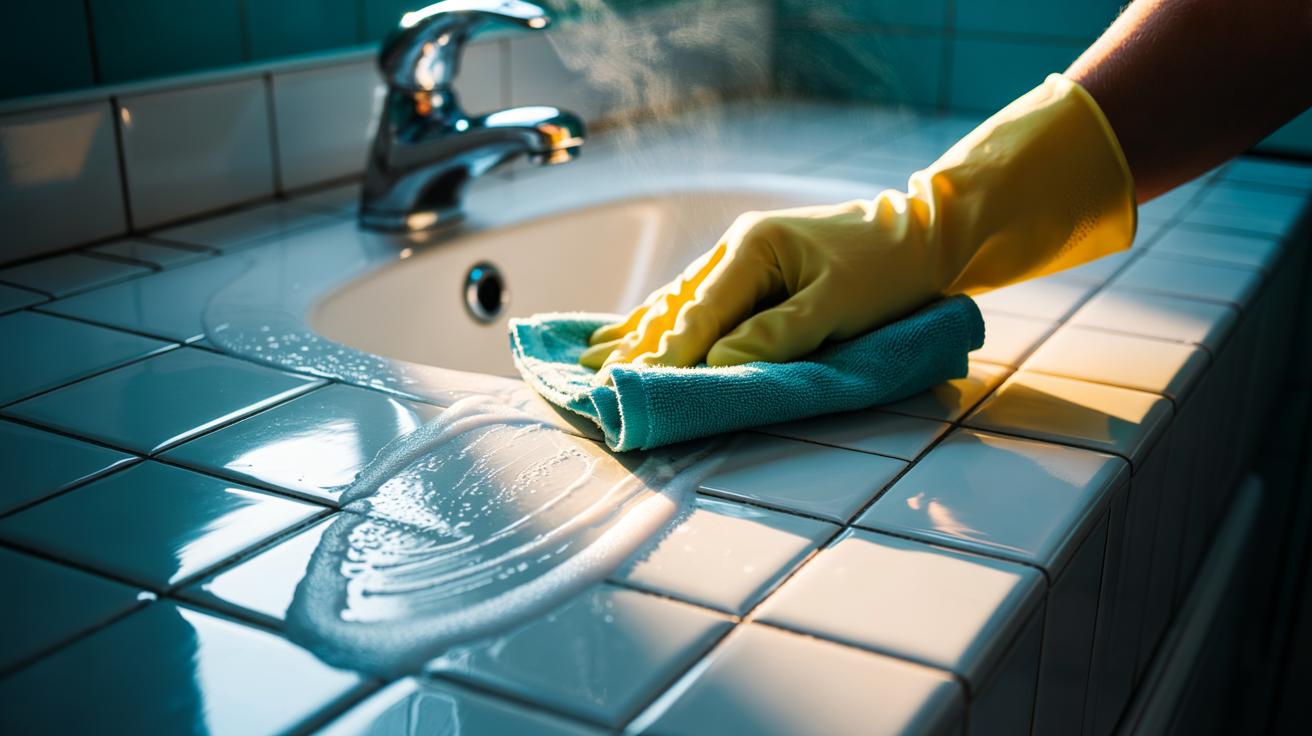
The goal is a paste that clings, spreads smoothly, and rinses clean. Use three parts baking soda to one part cool water for a spreadable, non-drippy texture. Smear a thin layer with a soft sponge across the tile face, leave it for 60–90 seconds, then massage gently in overlapping circles. Rinse or wipe with a warm, damp cloth and buff dry. For speed, keep the layer thin; the paste works at the surface, not in a heavy mound. If scum is stubborn, extend contact time to the full two minutes and add a single drop of mild washing-up liquid for extra glide and grease-cutting.
| Surface/Soil | Ratio (Soda:Water) | Add-in | Dwell Time | Notes |
|---|---|---|---|---|
| Glazed tiles, light film | 3:1 | None | 60–90s | Buff dry for extra shine |
| Soap scum build-up | 3:1 | 1 drop washing-up liquid | 2 min | Use soft sponge, not scouring pad |
| Grout haze | 2:1 | Water only | 2–3 min | Work with an old soft toothbrush |
| Light limescale on glaze | 3:1 | Mist of white vinegar after paste is removed | 2 min + 1 min | Sequential use, never mixed in a sealed container |
Keep it simple. Mix fresh; the paste dries out quickly. Rinse sponges well to avoid redepositing grey slurry. Microfibre cloths matter here—their split fibres trap fine residue that cotton misses. Finish with a dry buff to reveal the gloss you’ve uncovered.
Targeting Grout, Soap Scum, and Limescale
Grout first. It’s porous, so it grips soil. Apply a slightly thicker paste line along the joints and agitate with a soft, retired toothbrush at a shallow angle. Short, brisk strokes lift grime without dislodging the grout. Wipe sideways across the joint rather than along it to prevent pulling grit deeper. For sealed grout, go lighter—its coating needs only a quick pass and a careful rinse. If mould staining is present, spot-treat separately with diluted hydrogen peroxide, then return to the baking soda paste for uniform brightness.
For soap scum, spread paste across the tile face, let it sit for up to two minutes, and use a non-scratch sponge. The particles shear off the waxy film that water alone can’t move. Limescale is trickier—it’s mineral, not greasy. The paste scours the surface film so acids can reach the scale evenly. Remove the paste, then spritz a light mist of white vinegar and wipe after one minute. Don’t mix vinegar and peroxide, and never use any of this near bleach. The result: clear glaze, revived grout lines, and a fresher-looking wall with minimal effort.
Safety, Surfaces to Avoid, and Smart Add-Ins
Gloves are sensible. Dust can dry skin, and repeated scrubbing is hard on cuticles. Keep ventilation up and avoid breathing powder. Patch test any surface you don’t know, especially decorative finishes. Skip baking soda on marble, limestone, and some cement tiles—their softer, acid-sensitive matrices can dull or discolour. Acrylic shower trays and soft plastics also demand care: use extra water in the paste and lighter pressure to prevent hazing. Chrome and stainless taps tolerate the paste well if you use a gentle cloth and a quick rinse.
As for add-ins, think precision, not potions. A single drop of washing-up liquid improves wetting. A teaspoon of 3% hydrogen peroxide can brighten light grout staining—don’t combine it with vinegar, and always rinse between steps. Essential oils add scent but may leave residue; use sparingly. Avoid table salt, pumice, or harsh powdered cleansers on shiny glaze—too scratchy. Rule of thumb: if your finger can feel the grit coarseness, it’s too much for high-gloss tiles. Keep tools soft, motions small, and pressure modest. The paste does the work; you just guide it.
In practice, this method rewards consistency. A fast, two-minute sweep after the last shower of the day prevents build-up and keeps the sparkle effortless. It’s thrifty, kind to indoor air, and easy to teach to the household. A jar of baking soda by the sink and a microfibre cloth on the rail can be the difference between weekly drudgery and a daily, two-minute reset. What surface in your bathroom would benefit most from a gentle paste polish, and how might you tailor the mix to suit your tiles, water, and routine?
Did you like it?4.5/5 (27)