In a nutshell
- 🔬 The foil bath reverses tarnish by reducing silver sulfide (Ag2S) back to metallic silver as aluminium oxidises — a gentle redox reaction, not abrasion.
- 🧪 Method: line a non‑metal bowl with aluminium foil, add hot water and baking soda/washing soda, ensure direct contact between silver and foil, wait a few minutes, then rinse and dry.
- ⚡ Why it works: an alkaline electrolyte disrupts aluminium’s oxide film, heat speeds kinetics, and a tiny galvanic couple moves electrons that convert tarnish while sulfur migrates to the aluminium.
- 🚫 Cautions: avoid porous or delicate stones (opal, turquoise, amber), lacquered or intentionally oxidised pieces, mixed‑metal joins, and thin silver plate; when in doubt, consult a conservator.
- ✅ Practical wins: fast, non‑abrasive cleaning that preserves fine detail; use short cycles, glass/ceramic containers, and skip salt to reduce corrosion risk.
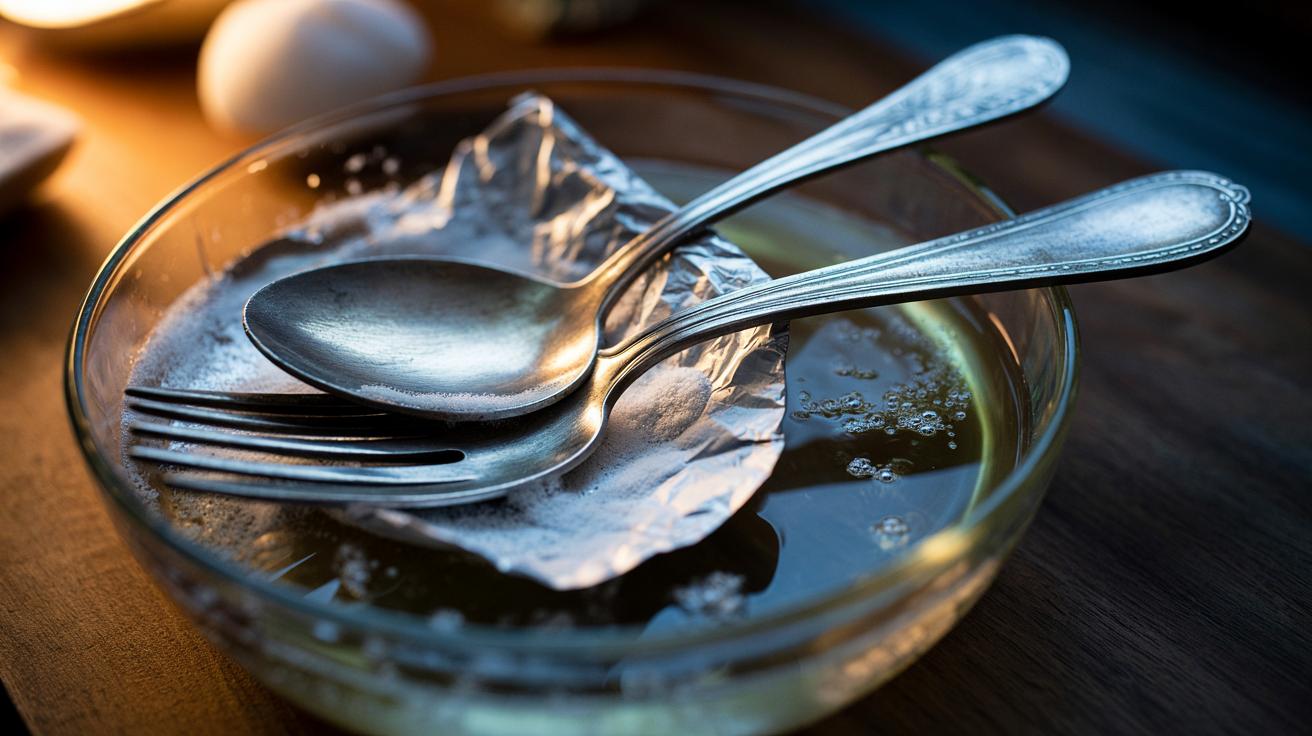
It looks like a parlour trick: lay dull silver on crinkled aluminium foil, sprinkle in kitchen powder, add hot water, and watch the black vanish. But this isn’t sleight of hand — it’s science you can hear fizzing in real time. What you’re witnessing is a quiet swap of elements and electrons turning gloomy tarnish back into gleam. The household simplicity belies a surprisingly elegant mechanism and a set of choices that determine how clean, how fast, and how safely it happens. This is not polishing — it’s chemistry at work. Here’s what’s really going on, and how to do it right.
Why Silver Tarnishes and Why Foil Works
Your silver goes grey because it reacts with airborne sulfur compounds to form silver sulfide (Ag2S), a stubborn, non‑reflective film. Traditional polishes grind that film away, along with microns of precious metal. The foil method takes a different route. Pairing silver with aluminium in a warm electrolyte creates a tiny galvanic cell. Aluminium, the more reactive metal, is oxidised; silver sulfide is reduced back to metallic silver. No abrasion. No loss of detail. Just a chemical handoff that restores the original surface. Always ensure direct contact between silver and foil to complete the circuit.
The magic depends on breaking aluminium’s invisible oxide skin and moving ions freely. That’s why mildly alkaline solutions such as sodium bicarbonate or sodium carbonate help, and why heat speeds the kinetics. The tarnish doesn’t dissolve; the sulfur is effectively transferred to the aluminium. In simplified terms: 3Ag2S + 2Al → 6Ag + Al2S3. You may catch a faint whiff if sulfide meets acid residues, but in a basic bath there’s little odour. The result can be striking: clean, continuous reflectivity with filigree and hallmarks intact.
Step-by-Step: The Kitchen-Sink Restoration
Line a glass or ceramic bowl with aluminium foil, shiny side up. Add hot water — comfortably steaming, not boiling — then stir in a tablespoon of baking soda (or a teaspoon of washing soda) per litre. Place your silver so it touches the foil. Wait, turning once or twice. Rinse and dry. That’s the whole script. Still, small tweaks matter, and each ingredient has a job to do.
| Item | Role in Reaction |
|---|---|
| Aluminium foil | Reducing metal; supplies electrons; captures sulfur |
| Hot water (60–75°C) | Accelerates ion transport and reaction rate |
| Sodium bicarbonate (baking soda) | Mildly alkaline electrolyte; disrupts aluminium oxide film |
| Sodium carbonate (washing soda) | Stronger alkali; faster for heavy tarnish |
| Glass/ceramic container | Prevents stray galvanic reactions |
Work in short cycles: two to five minutes per piece, repeating rather than forcing with heat. Do not boil pearls, opals, or glued settings. For crevices, re‑position to keep contact points fresh. A soft brush can move trapped bubbles but isn’t strictly necessary. Rinse thoroughly to remove any residual salts, then buff dry with a lint‑free cloth. If a faint yellow cast remains, it’s usually oil or lacquer, not tarnish; wash with mild soap before another bath. Stop once the shine returns — overdoing brings no extra benefit.
The Chemistry, Plainly Explained
Tarnish is a corrosion product: silver atoms on the surface have bonded with sulfur to form Ag2S, a compound that scatters light. In your bath, aluminium has a much lower reduction potential than silver (Al3+/Al ≈ −1.66 V versus Ag+/Ag ≈ +0.80 V), so it willingly gives up electrons. Those electrons travel through the metal‑to‑metal contact to the silver sulfide layer, which is then reduced back to metallic silver. The sulfur doesn’t vanish; it binds with aluminium, often ending as aluminium sulfide or, in aqueous alkaline conditions, as species that ultimately yield aluminium hydroxide and sulfide/sulfite derivatives.
The powders aren’t abrasives here; they’re chemistry enablers. Bicarbonate/carbonate makes the solution alkaline, helping strip the passive oxide layer on aluminium so the reaction can start and keep going. Ions in solution carry charge, turning your bowl into a mini galvanic couple. Heat adds mobility, so everything proceeds faster. A pinch of salt increases conductivity but can invite chloride corrosion on some alloys; prefer carbonate/bicarbonate first. Crucially, the silver surface is restored rather than re‑cut. Microscopic detail returns because you convert the film, not grind it away. That’s why the “tin‑foil trick” (a misnomer — it’s aluminium) feels like alchemy, yet stands on solid electrochemistry.
When Not to Use the Foil Trick
Not every object belongs in a hot alkaline bath. Avoid porous or delicate gemstones — turquoise, opal, amber, coral, and anything glued rather than bezel‑set. Keep lacquered or intentionally blackened (oxidised) silver out unless you want to strip the artistic patina. If the dark recesses are part of the design, this method will lighten them. Be cautious with mixed‑metal pieces; differing potentials can make odd things happen at joins or solder seams, especially on modern costume jewellery.
Silver‑plated items are a special case. The reaction itself is gentle, but if plate is thin and patchy, any cleaning can expose base metal. Test a small area first. Antique pieces with value derived from age may be better left with their mellow tone; a conservative museum approach favours minimal intervention. Finally, if tarnish is brown or multicoloured rather than sooty black, you may be seeing oxides, oils, or fire‑scale from past repairs. In those cases, professional bench work beats kitchen chemistry. When in doubt, consult a qualified conservator.
The aluminium‑foil bath succeeds because it flips the script on cleaning: instead of scouring away, it rebuilds the original silver surface by moving sulfur elsewhere. Fast, quiet, and oddly satisfying, it’s a rare household hack that holds up under a chemist’s gaze. Used judiciously, it protects detail, saves time, and extends the intervals between maintenance polishes. Ready to try it on that heirloom teapot or tangle of spoons waiting in a drawer — and what piece of silver will you dare to revive first?
Did you like it?4.5/5 (24)