In a nutshell
- 🌿 Banana peels deliver fast potassium (K) plus trace minerals, boosting the rhizosphere and improving cation exchange—often creating an overnight lift in leaf turgor and sheen.
- 🧴 Three indoor-safe methods: a strained peel soak (“banana tea”), a micro‑dose fine chop buried 2–3 cm deep, and a blender slurry mixed into fresh compost; pair with a balanced 3‑1‑2 NPK.
- ✅ Expected gains: perkier peace lilies, greener aroids, steadier transpiration; limits: peels are low in nitrogen, so they support but don’t replace complete fertilising or adequate light.
- 🚫 Red flags and hygiene: avoid whole peels, watch for fungus gnats, sour smells, or surface mould; keep doses small, filtered, and infrequent to prevent anaerobic rot.
- 🧪 Evidence and timing: analyses show real K release and microbial stimulation; apply in spring–early autumn for active growth, track responses, and enjoy the zero‑waste sustainability win.
Houseplants flag when the soil goes flat. Leaves dull, growth stalls, watering seems to do less and less. Here’s a simple, kitchen‑cupboard fix with an outsized payoff: the humble banana peel. Rich in potassium and companion minerals, it can jump‑start the pot’s living ecosystem and nudge tired compost back to life. Used correctly, a banana peel can refresh available nutrients surprisingly fast—often by the next morning. This is not magic; it’s biology with a dash of chemistry. Below, I unpack what actually happens, show safe methods tailored for indoor pots, and set out the limits so you get lush foliage without inviting gnats, mould, or mess.
How Banana Peels Feed Soil Life Overnight
Banana peels carry a quick payload of soluble potassium (K), plus smaller amounts of phosphorus (P), calcium (Ca), magnesium (Mg), and trace elements. When the peel is chopped or steeped, these ions diffuse into water and, upon watering, into the potting mix. Plants depend on K to regulate stomata and maintain turgor, so a fast top‑up can visibly perk leaves. What looks like an overnight miracle is often a swift correction of a mild K shortage coupled with an energy boost to soil microbes. Sugars on the peel act like a starter feed for beneficial bacteria and fungi in the rhizosphere. As microbial activity ticks up, organic complexes loosen, releasing nutrients that were present but locked away.
There’s a second effect: improved cation exchange in peat‑ or coir‑based mixes can make existing K and Ca more available. Don’t expect a full fertiliser profile—the peel is low in nitrogen—but it is a potent nudge. Indoor conditions keep temperatures steady, so soluble compounds move quickly through a well‑drained mix. If the plant has been underfed or repeatedly flushed with plain water, that small infusion can be just enough to restore sheen and steady growth by dawn.
Practical Methods for Indoor Use
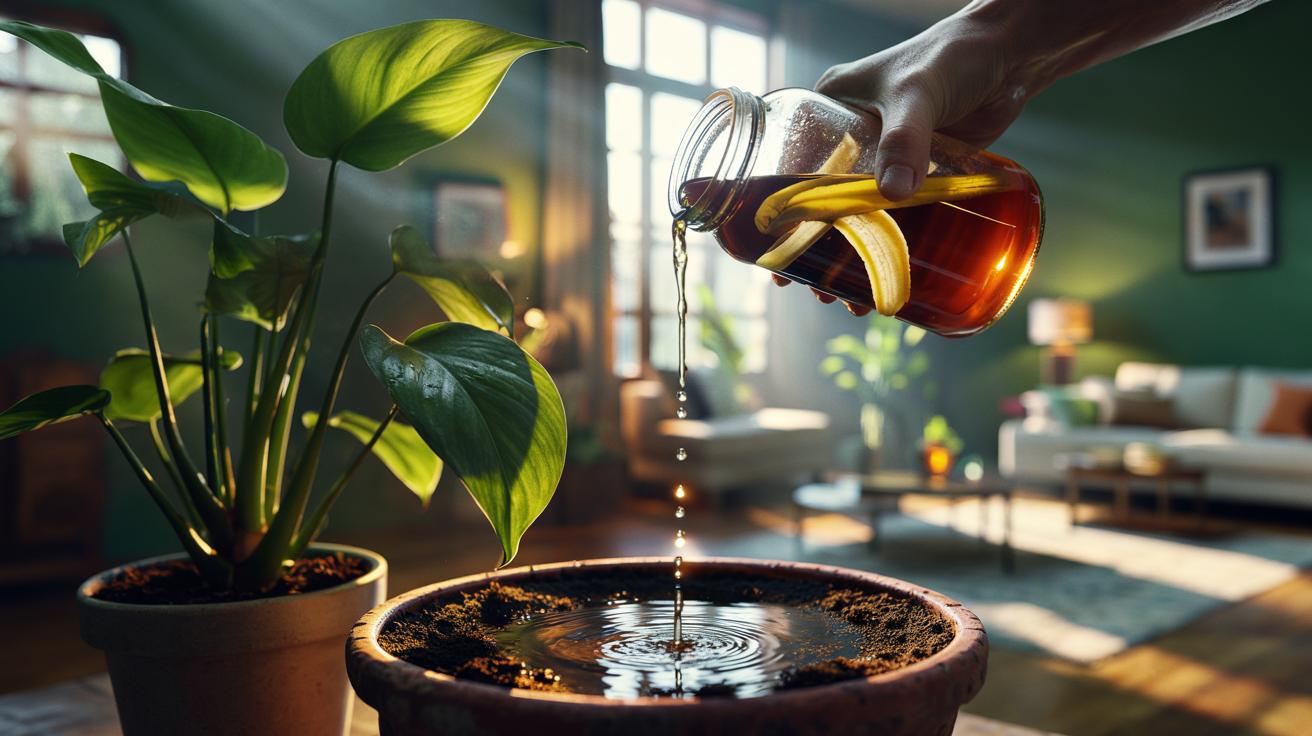
Peel soak (banana “tea”). Rinse one fresh peel, slice into strips, and submerge in 1–2 litres of clean water for 12–24 hours. Strain thoroughly. Use the liquid to drench soil until a little runs through the drainage holes. Do not leave peel pieces in the pot—indoors they rot slowly and attract fungus gnats. Apply monthly in spring and summer, less in winter. For sensitive plants, dilute 1:1 with water.
Fine chop and bury (micro‑dose). Mince a thumbnail‑sized piece of peel per 12–15 cm pot. Tuck it 2–3 cm below the surface, away from the stem. This slow‑release approach feeds microbes locally, ideal for fast growers like pothos and monstera. Replace or move the spot each month. If you notice mould on the surface, remove and reduce the amount.
Blender slurry (for repotting). Blend one peel with a cup of water to a thin paste and mix a spoonful through fresh compost when repotting. It distributes nutrients and carbon evenly, minimising rot pockets. Never wedge whole peels into compact soil; anaerobic decay harms roots. Pair any method with a balanced liquid feed (for example, a 3‑1‑2 NPK) to cover nitrogen needs.
Key Nutrients at a Glance
Understanding what’s in a banana peel helps you target expectations and avoid overdoing it. The table below sketches the standout elements and what they do for foliage and roots. Think of the peel as a potassium‑first amendment rather than a complete fertiliser.
| Nutrient | Role in Plants | Notes | Release Speed |
|---|---|---|---|
| Potassium (K) | Stomatal control, water balance, enzyme activation | Most available from peels; visible perk‑up common | Fast (hours–days) |
| Phosphorus (P) | Root growth, energy transfer (ATP) | Lower amounts than K; benefits accumulate | Moderate (days–weeks) |
| Calcium (Ca) | Cell walls, new growth integrity | Helps reduce tip burn where Ca was marginal | Moderate |
| Magnesium (Mg) | Chlorophyll core, photosynthesis | Trace levels; complements regular feeds | Moderate |
For lush indoor foliage, combine peel‑based boosts with consistent, measured fertilising and good light. Overreliance on peels won’t fix deep nutrient poverty or poor watering habits.
What to Expect: Benefits, Limits, and Red Flags
Used sparingly, you can expect deeper green leaves, steadier transpiration, and fewer limp afternoons in thirsty plants like peace lilies. Trailing aroids often show the quickest response. Herbs in bright kitchens appreciate the gentle K‑tilt, but they still need nitrogen to keep producing fresh growth. Banana peel treatments are supportive, not a silver bullet. Watch for early warning signs of trouble: a sweet, fermenting smell from the pot, fruit flies, or a fluffy white bloom on the surface indicate you’ve fed microbes faster than your mix can breathe. Remove residues, aerate the top layer, and extend intervals.
Succulents and cacti prefer lean, mineral mixes; limit peel soaks to very light, occasional use or skip entirely. In hard‑water regions, don’t assume peels fix calcium issues—delivery is local and modest. If your plant is chlorotic, a chelated iron supplement or pH adjustment may be the real cure. Pair peel inputs with bright, indirect light and a consistent watering rhythm. When the basics are right, the peel’s micronutrient nudge shines.
Evidence Check and Sustainable Habits
Laboratory analyses support the peel’s mineral profile and its capacity to stimulate microbial activity. Trials on compost teas and fruit‑waste extracts show meaningful K release and a bump in dissolved organic carbon—just what a tired potting mix craves. Still, houseplant pots are closed systems, and the dose makes the difference. Small, filtered, and infrequent beats bold and messy indoors. From a sustainability angle, the peel is a no‑cost, zero‑waste amendment that reduces reliance on synthetic K inputs. Wash peels to remove surface residues, and keep everything clean to avoid pests.
Timing matters. Apply during the plant’s active phase—spring through early autumn—and scale back in winter dormancy. Track responses: shinier leaves within a day or two suggest K was limiting; no change hints at another gap (often nitrogen or light). If you repot annually and feed lightly with a balanced fertiliser, the banana peel becomes an elegant supplement rather than a crutch. It’s the quick tune‑up, not the full service.
Done thoughtfully, a banana peel turns yesterday’s snack into today’s plant tonic, enlivening the soil web and putting vital potassium back within reach of roots. You’ll see the difference first in leaf posture, then in colour, then in confident new growth. Keep it clean, keep it modest, and keep it regular through the growing season. The secret is consistency paired with restraint. Which of your houseplants would you trial first with a carefully strained peel soak, and how will you measure the overnight change?
Did you like it?4.5/5 (22)