In a nutshell
- 🌱 Salt-free granular acetic acid (horticultural vinegar on a biodegradable carrier) activates with water to scorch foliage on contact; it’s a non-selective top-growth knockdown that works in hours on small annuals.
- 🗓️ Best on young weeds during warm, dry, calm conditions and ideal for paths, cracks, and bed edges; deep-rooted perennials may resprout, so pair with mulch and root extraction for lasting control.
- 🎯 Application is simple: a light sprinkle to speckle leaves, then a fine splash to dissolve in place—precision beats quantity; use gloves, eye protection, and shields to protect desirable plants and keep pets/kids away until dry.
- ⚖️ Compared with alternatives—corn gluten (pre-emergent), boiling water (thermal), and hand weeding (root removal)—the sprinkle offers speed and accuracy; the best results come from a blended, site-specific strategy.
- ♻️ Environmentally savvy: no sodium build-up and acetic acid breaks down quickly, keeping it soil-friendly while delivering fast, visible results and reducing maintenance when integrated with mulching and timely follow-ups.
Fed up with weeds but wary of scattering salt that scorches soil and lingers for months? Gardeners across the UK are turning to a salt-free fix that you simply sprinkle, moisten, and watch work. The secret is a granular form of horticultural vinegar—acetic acid bound to a biodegradable carrier like corn-cob grit—which dissolves with a splash of water and desiccates leafy pests on contact. It’s neat, targeted, and quick. On tender seedlings, visible wilt often starts within an hour; on small annuals, the top growth can collapse the same day. Used wisely, it spares your beds from sodium build-up, keeps paths tidy, and buys you time for lasting, eco-savvy weed control.
What Is the Salt-Free Sprinkle and How It Works
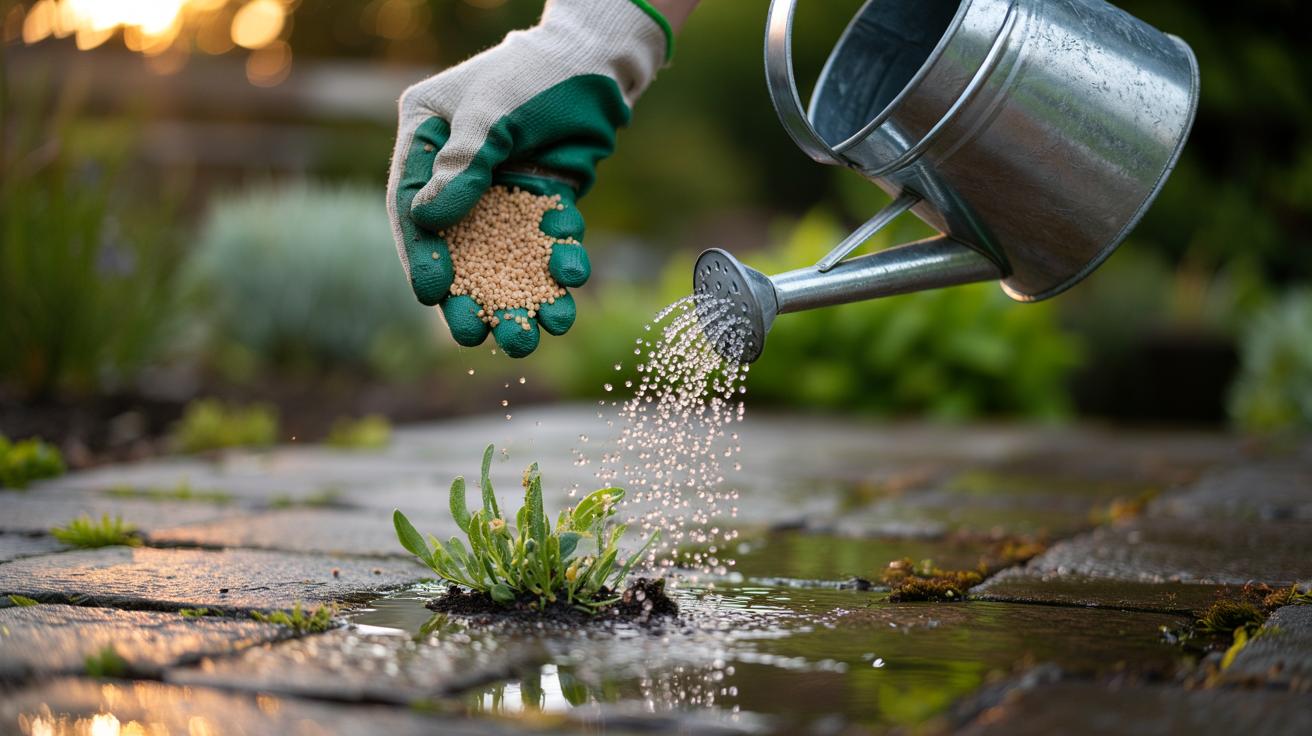
The “natural sprinkle” is a granular acetic acid product, sometimes marketed as horticultural vinegar pellets. Unlike household vinegar in a spray, these grains stay put. You dust them exactly where the weed foliage sits, then activate with a light watering. The granules dissolve and release acetic acid, which penetrates the leaf cuticle and disrupts cellular membranes. Result: rapid dehydration of above-ground tissues. Because it’s a contact, non-selective herbicide, anything green it touches is at risk. Accuracy matters.
Crucially, this method is salt-free. There’s no sodium chloride to impair soil structure or harm worms and microbes by lingering in the root zone. Acetic acid breaks down into carbon dioxide and water, leaving minimal residue. That makes it attractive for gravel drives, paving cracks, and bed edges where drift from sprays is frustrating. It’s not systemic, though. Perennial weeds with deep reserves—dandelions, couch grass, bindweed—often regrow because their roots remain intact. Think of it as instant top-growth knockdown, not a one-hit cure for every invader.
When to Use It: Situations, Surfaces, and Seasons
Timing is half the battle. The granules perform best on young weeds with soft tissue—fresh seedlings, thread-stage volunteers, and shallow-rooted annuals like chickweed and bittercress. Hit them early and you win quickly. Midday warmth accelerates action, and bright, dry weather helps the foliage dehydrate. Avoid rain in the next few hours; you want the acid to stay on the leaves, not wash away. Calm days are ideal to keep granules and splash precisely where you intend.
Surfaces matter. On paths, patios, and gravel, the contact is direct and clean. Along borders, precision is essential: tuck granules right onto the target rosettes and use a watering can with a fine rose to activate without splashing prized plants. Around vegetables, treat only before sowing or on empty beds; never dust edible leaves. Expect rapid results on annuals, slower on waxy species. For persistent perennials, pair this tactic with mulch, root extraction, or repeated top kills to exhaust reserves. You’ll see improvement, but strategy beats a single sprinkle.
How to Apply for Fast, Visible Results
Start dry. Sprinkle a light peppering—just enough to speckle every leaf surface of the target weed. Precision beats quantity. Then apply a conservative splash of water to dissolve the grains in place. Within minutes, foliage may dull; within hours, it wilts as cells collapse. For small seedlings, that’s often the end of the story. For tougher annuals, check back after 24 hours and reapply if patches remain green. Keep pets and children away until the area is dry and dust has settled.
Safety is straightforward: wear gloves and eye protection; avoid windy application; rinse any accidental contact with desirable plants immediately with plenty of water. Because this is non-selective, shields help—use a scrap of cardboard as a guard along lawn edges or around perennials. Don’t drench soil; you’re treating leaves, not roots. Where perennials resprout, repeat light treatments at the rosette stage or combine with careful hand-lifting of crowns. The goal is consistent pressure with minimal collateral impact, not blanket saturation. Finish by mulching bare ground to block the next flush from ever seeing daylight.
How It Compares to Other Natural Options
Choosing the right tool depends on the weed, the surface, and your patience. The salt-free sprinkle’s strength is speed and precision on hard surfaces and young growth. Other methods have different sweet spots. Here’s a quick snapshot to frame your plan:
| Method | How It Works | Speed | Best Use | Salt-Free |
|---|---|---|---|---|
| Granular acetic acid | Contact burn of foliage after activation with water | Hours on seedlings | Paths, cracks, bed edges; young annuals | Yes |
| Corn gluten meal | Prevents seed germination | Preventive; no instant kill | Lawns and beds before weed seeds sprout | Yes |
| Boiling water | Thermal shock to tissues | Immediate on tender growth | Paving cracks, gravel; spot hits | Yes |
| Hand weeding | Physical removal of roots and tops | Varies | Beds, around ornamentals; perennials | Yes |
There’s no single silver bullet. Use the sprinkle-and-splash approach for rapid visible control, lay down mulch for suppression, and reserve hand tools for deep-rooted veterans. That mix keeps your routine salt-free, soil-friendly, and effective across seasons.
Salt-free weed control doesn’t have to mean slow results or endless stooping. With granular horticultural vinegar, you gain a tidy, targeted way to scorch intruders fast while keeping sodium out of the soil and biodiversity in mind. It’s a smart bridge between instant tidy-ups on paths and long-term resilience in beds. Combine it with mulches, dense planting, and timely hand lifts, and your maintenance drops month by month. Fast where you need it, gentle where it counts. Ready to rethink your weeding routine—what spot in your garden would benefit most from a quick, salt-free sprinkle first?
Did you like it?4.4/5 (28)