In a nutshell
- 🌙 Overnight gloss arises as calcium smooths the leaf’s cuticle, flocculates grime, and levels residue, boosting light reflection rather than “feeding” the plant.
- 🥚 The trick: convert crushed eggshells with vinegar into calcium acetate, dilute, then mist or wipe at dusk; finish with a light morning buff for a clean, even sheen.
- 🧪 Why it works: Ca²⁺ can cross‑link pectin at the surface, firming tissues; night application slows evaporation and reduces spotting, aiding a smooth, reflective wax layer.
- 🌿 Best candidates: broad, waxy leaves (rubber plants, monsteras, peace lilies) respond fastest; avoid hairy foliage, blooms, and tight rosettes; test one leaf first.
- ⚠️ Caveats: this is a cosmetic boost, not a cure for deficiency; keep doses mild, watch pH, don’t mix with oils/fertilisers same day, and repeat monthly, not weekly.
It sounds like a hack whispered between allotments: crushed eggshells can make tired, dull foliage look glossy by morning. The surprise is that there’s sound plant science behind the sparkle. Calcium, the dominant mineral in eggshells, can change the way a leaf’s outer layer behaves, especially when applied gently in the evening and left undisturbed through the night. Overnight shine is mostly the result of a smarter clean and a kinder chemistry, not a miracle feed. Used well, this kitchen cast‑off polishes the cuticle, tames residue, and supports sturdier new growth. Used badly, it’s just cold omelette water. Here’s how to do it right—and why it works.
What Calcium Actually Does on Leaves
The upper skin of a leaf—the cuticle—is a waxy barrier that naturally reflects light when smooth, and looks dull when dusted, pitted, or streaked with limescale. When you apply a mild, leaf‑safe solution of calcium, two things tend to happen. First, calcium ions (Ca²⁺) can cross‑link pectin in cell walls at the surface, subtly firming the tissue and helping that wax layer sit flatter, which boosts sheen. Second, calcium gently flocculates grime and soap residues, making them easier to lift without gouging the wax. The shine you see by morning usually comes from a cleaner, better‑laid cuticle, not from feeding the plant overnight.
Night matters. Spraying or wiping at dusk reduces rapid evaporation and the risk of midday spotting, giving a thin film time to level out. Most houseplants close stomata in the dark; you’re not force‑feeding calcium inside the leaf. Rather, you’re caring for the surface, where epicuticular wax and microbial films decide whether light scatters or gleams. There’s a caveat: some species (notably CAM plants like many succulents) open stomata at night, so go lighter to avoid moisture sitting in tight rosettes. Either way, the glossy result is chiefly cosmetic, while the structural benefit accrues on new growth over weeks.
Think of calcium here as a courteous housekeeper for the leaf’s exterior—less harsh than chloride salts, more purposeful than plain water.
The Eggshell Trick, Step by Step
Start with cleanliness. Rinse your eggshells, peel away the inner membrane, and bake them at 120°C for 10 minutes to sterilise. Grind to a fine powder; the smaller the particles, the better the chemistry. To make a leaf‑safe solution, place 1 teaspoon of powder in a jar, add 1 tablespoon of vinegar (acetic acid), and let it fizz—this converts chalky calcium carbonate into more soluble calcium acetate. Top up with 250 ml warm water, stir, then dilute to 1 litre. Add one drop of mild, fragrance‑free soap as a surfactant if your water beads on leaves. Do not use raw egg water—protein films smear, smell, and invite microbes.
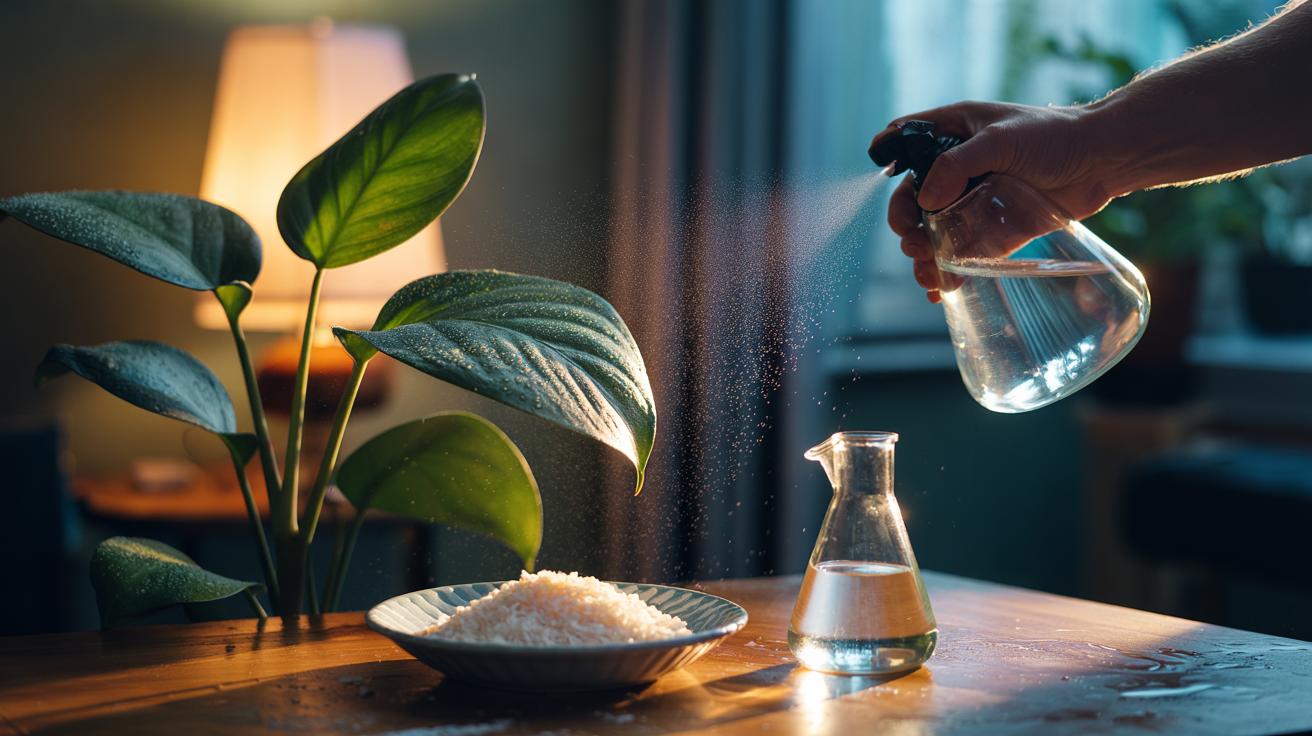
Application is gentle. At dusk, mist a fine veil over leaves or dampen a clean microfibre cloth and wipe in one direction, supporting each leaf with your hand. Avoid hairy foliage (e.g., African violets), open blooms, and the crowns of succulents. Leave the plant overnight where air can circulate. By morning, buff once with a dry cloth to level the wax and lift any faint film. If you see white flecks, you’ve either used too much powder or hard tap water—rinse lightly and wipe again. Repeat monthly in the growing season, not weekly; this is polishing, not a daily beauty routine.
As for safety, test one leaf first. Keep solutions away from terrariums and ultra‑sensitive ferns. Never mix with fertiliser sprays or oils on the same day. Store any leftover liquid sealed and cool for a week at most, then discard; it’s cheap to make fresh and stays cleaner that way. Highlight the rule: less is more.
Evidence, Caveats, and Plant Types That Respond
Commercial growers have long used foliar calcium sprays—typically calcium chloride or calcium acetate—to strengthen tissues and reduce disorders such as tip burn. Your homebrew version is simply a softer, household‑acid route to a similar ion, without the leaf‑burn risk of chloride salts. That said, doses are modest, delivery is mostly superficial, and any deep nutrition effect is limited. This trick will not fix a systemic calcium deficiency overnight; root uptake from a balanced medium remains essential. Expect the fastest cosmetic payoff on plants with broad, waxy leaves: rubber plants, monsteras, peace lilies. Thin, matte, or pubescent leaves show less gloss and prefer a lighter touch.
| Calcium Source | Solubility | Best Use | Leaf-Burn Risk |
|---|---|---|---|
| Eggshell powder in water | Very low | Soil top-dress; slow release | Very low |
| Eggshell + vinegar (calcium acetate) | Moderate | Foliar wipe/mist for shine | Low |
| Calcium chloride solution | High | Commercial foliar feeding | Medium–high if too strong |
| Hard tap water (limescale) | Variable | Basic cleaning, then buff | Low–medium (spotting) |
Two final cautions. First, never polish a plant that’s sun‑stressed or pest‑ridden; solve the underlying issue before shine. Second, keep the pH friendly: the finished mix should feel barely tangy, not sharp. If it smells strongly of vinegar, dilute further. Healthy gloss signals an intact cuticle and stable environment, not just a wipe‑down. When these conditions align, the overnight reveal looks dramatic because you removed scatter—not because you painted on plastic sheen.
Used mindfully, the eggshell trick is a thrifty, circular way to pamper leaves while reinforcing good fundamentals: clean surfaces, soft water, and a touch of calcium that behaves itself. It’s quiet care, done at dusk, rewarded at dawn. The best part is that you can see the difference and still sleep through the work. Will you try the acetate method on one test leaf this week—and, if you do, which plant in your home would make the most satisfying before‑and‑after?
Did you like it?4.5/5 (30)