In a nutshell
- 🌱 Calcium fortifies cell walls, improves membrane transport, and stabilises soil structure, boosting overall nutrient absorption and plant resilience.
- 🥚 Turn kitchen shells into an eggshell blend: rinse, bake, and grind to a fine powder; mix with compost for steady release or use a vinegar extract (calcium acetate) for fast action.
- 📊 Follow practical application rates (e.g., 50–80 g/m² top-dress; 5–10 g/L in potting mix), water in, pair with a balanced feed, and always check pH to avoid over-alkalinity.
- ⚠️ Works best in acidic soils and for crops like tomatoes and brassicas (may ease blossom-end rot), but can hinder phosphorus and iron in calcareous soils (pH > 7.5).
- 🔬 Fine particles dissolve faster; warm, biologically active soils and strong microbial activity/mycorrhizae improve release—use soil tests and plant signals to tailor timing and dose.
Every eggshell is a tiny limestone quarry. Crack one, and you are holding mostly calcium carbonate, a mild, slow-release mineral that quietly transforms tired beds into productive soil. Gardeners notice sturdier stems, crisper leaves, and fewer disorders when calcium is available at the root zone. The chemistry is elegant yet practical. Calcium stabilises cell walls, guides nutrient traffic through membranes, and conditions soil particles so other ions can move freely. Think of it as a traffic marshal and a bricklayer at once: directing movement while fortifying structure. An eggshell blend—properly prepared and applied—can invigorate the subterranean ecosystem and make every fertiliser you add work harder.
Why Calcium Unlocks Nutrients in Soil
Plants need calcium as a secondary macronutrient, but its influence stretches beyond simple supply. At the soil interface, Ca²⁺ sits on clay and humus surfaces, reducing dispersion and improving aggregation. That matters. Stable crumbs let water infiltrate, oxygen circulate, and roots explore. When pore spaces open, nutrients arrive on time and in balance. Calcium also moderates cation exchange, displacing sodium and hydrogen ions that can clog exchange sites and sour the profile.
Inside roots, calcium regulates membrane permeability and the channels that shuttle nitrate, potassium, and magnesium. The result is smoother uptake and fewer antagonisms between nutrients. It also buffers micro-pH around root hairs; many enzymes that release phosphorus and trace elements perform better in that steadier zone. Phosphorus, in particular, is less likely to get stranded when calcium is present but not excessive.
The biological story is equally compelling. Calcium-rich microhabitats encourage beneficial bacteria and mycorrhizal fungi, which secrete acids and chelators to free bound minerals. That synergy—physics, chemistry, biology—explains why a modest boost of bioavailable calcium can make fertiliser regimes more effective while reducing waste.
Turning Kitchen Eggshells Into a Potent Soil Blend
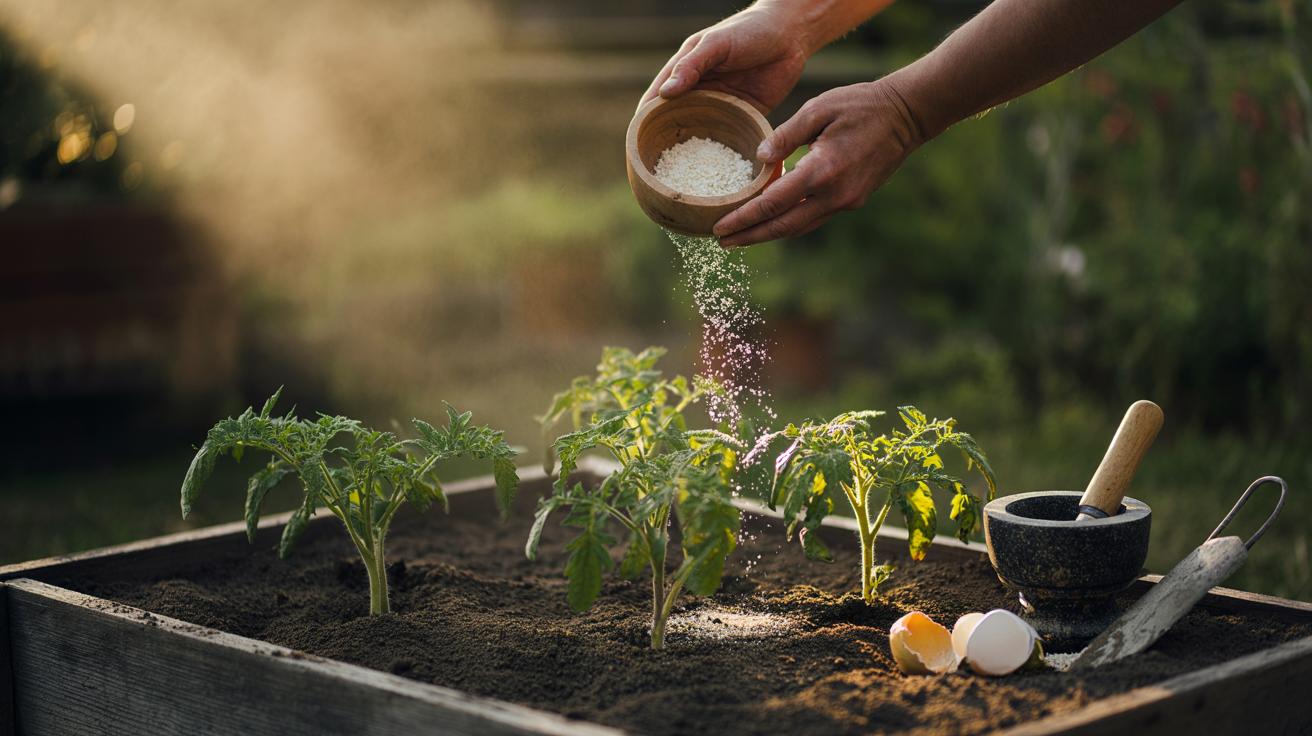
Raw shells are slow. Processing is your lever. Rinse to remove albumen, air-dry, then bake at 100–120°C for 10–15 minutes to sterilise and make them brittle. Grind to a fine powder; the smaller the particle, the faster the dissolution. Mix with finished compost to provide acids that help solubilise calcium, or pre-react with vinegar to create a faster-acting calcium acetate solution for urgent cases. Powder for season-long release; vinegar extract when deficiencies bite. Blend with coffee grounds or biochar only in modest amounts to avoid nitrogen tie-up and pH spikes.
| Material/Method | Typical Ratio or Rate | Speed of Action | Notes |
|---|---|---|---|
| Eggshell powder in compost | 1 part shells : 10 parts compost | Slow–medium | Great for beds; microbe-assisted release |
| Top-dress powder | 50–80 g/m² per month in season | Slow | Water in; avoid piles against stems |
| Container mix addition | 5–10 g per litre of potting mix | Medium | Balances peat/coir acidity |
| Vinegar extract (calcium acetate) | 1:10 dilution; 100 ml per plant | Fast | Use sparingly; check pH |
| Blend with seaweed meal | 1:4 shells:seaweed | Medium | Adds trace elements and hormones |
Apply during active growth and lightly fork into the top 3–5 cm. Water well. Pair with a balanced feed; calcium enables uptake but does not replace nitrogen, potassium, or magnesium. Test soil pH before heavy applications to avoid creeping alkalinity. If using a vinegar extract, trial on a small area first and never mix with phosphate fertilisers in the same can to prevent precipitation. Expect gradual improvements in tilth and resilience over weeks, with stronger responses as microbial activity peaks in warm soils.
When Eggshell Calcium Helps — And When It Doesn’t
Eggshells shine in acidic, nutrient-leaky soils—coastal sands, tired allotments, container mixes dominated by peat or coir. Here, calcium firms soil structure, reduces aluminium toxicity, and steadies the uptake of potassium and magnesium. Tomatoes, brassicas, apples, and lettuces often show crisper foliage and fewer blemishes. Blossom-end rot in tomatoes can ease when root-zone calcium and watering are consistent.
But there are limits. On chalky or calcareous ground (pH above ~7.5), extra calcium rarely helps and can lock up phosphorus and iron, leading to pale leaves. Heavy clays already rich in calcium benefit more from organic matter than from more shells. Don’t chase a calcium cure for problems caused by drought, salinity, or root damage.
Timing and texture matter. Coarse flakes dissolve glacially; powder performs. Release accelerates in warm, biologically active soils and in the presence of organic acids from compost and root exudates. Use a simple soil test and observe leaves: tip burn, distorted new growth, and bitter pit in apples suggest disrupted calcium transport. Then adjust water consistency first, and only then add an eggshell blend if pH and tests support it.
Recycling eggshells is frugal, local, and quietly powerful. You are not dumping lime; you’re delivering a calibrated, microbe-friendly nudge that supports root function, soil structure, and nutrient absorption. Combine fine powder with mature compost for steady release, reserve vinegar extracts for targeted rescue, and always let pH and plant signals guide the dose. Healthy soil is a system, not a single ingredient. With that mindset, even a breakfast remnant becomes a seasonal asset. How will you test, tailor, and time your next eggshell application to get the most from your soil without overdoing it?
Did you like it?4.5/5 (26)