In a nutshell
- 🫖 A 10‑minute foot soak in strong tea leverages tannins for an astringent tightening effect that visibly smooths rough, cracked heels while supporting the skin’s acid mantle and offering mild antimicrobial benefits.
- 🦶 Method in brief: brew 3–5 black tea bags per 1 litre, steep 5–10 minutes, cool to ~40–42°C, soak feet for 10 minutes, pat dry, lightly pumice, then moisturise with urea (10–20%) or glycerin and seal with socks.
- ⚠️ Safety first: avoid use on open or infected skin, and seek advice if you have diabetes, neuropathy, or poor circulation; watch for tea allergies and expect cosmetic staining—always follow with a moisturiser to counter drying.
- 📈 Realistic results: instant smoothing and less snagging after one session; deeper fissures need repetition plus emollients, aligning with dermatology’s use of astringent soaks for surface management.
- 🧴 Keep gains: combine humectant + occlusive aftercare, gentle filing only on softened skin, supportive footwear, and weekly maintenance; tea choice matters—black tea is most effective, with green and oolong milder, while most herbal infusions lack sufficient tannins.
Dry, cracked heels can turn a short walk into a slow shuffle. Yet a kitchen staple — the humble tea bag — offers a quick, inexpensive rescue. Soaking your feet in strong tea delivers a flood of plant compounds called tannins, which act like a gentle tightening treatment for the skin’s surface. In as little as ten minutes, roughness feels reduced, edges look neater, and the skin’s texture regains some grip. It’s simple, it’s soothing, and it slots neatly into a busy evening. The trick is concentration and contact time: strong brew, short soak, smart aftercare. Here’s how and why it works, plus the safest way to turn teabags into a fast heel-smoothing ritual.
Why Tea Tannins Transform Rough Heels
Tannins are polyphenols abundant in black and green tea. On skin, their astringent action binds to proteins in the outermost layer, the stratum corneum, creating a micro-tightening effect. Think of it as gently cinching loose fibres. This temporary contraction can make flaky edges look flatter and feel smoother. That visible difference after a short soak is the astringency doing its job. The mildly acidic pH of tea (typically around 4–6) also supports the skin’s natural acid mantle, which prefers slightly acidic conditions for optimal barrier function.
There’s more. Tannins show light antimicrobial activity, helpful when cracked heels risk harbouring odour-causing bacteria. They can also reduce excessive sweat in some people, which is why black tea soaks are a classic home fix for sweaty feet. Importantly, this is not an exfoliating peel. Rather, tannins firm and smooth the outer layer, making any subsequent filing or moisturising more effective. Expect skin to feel tighter and look tidier, not magically “new” in one go. For deeper fissures, you’ll need repetition, emollients, and patience.
10-Minute Tea Bag Foot Soak: Step-by-Step
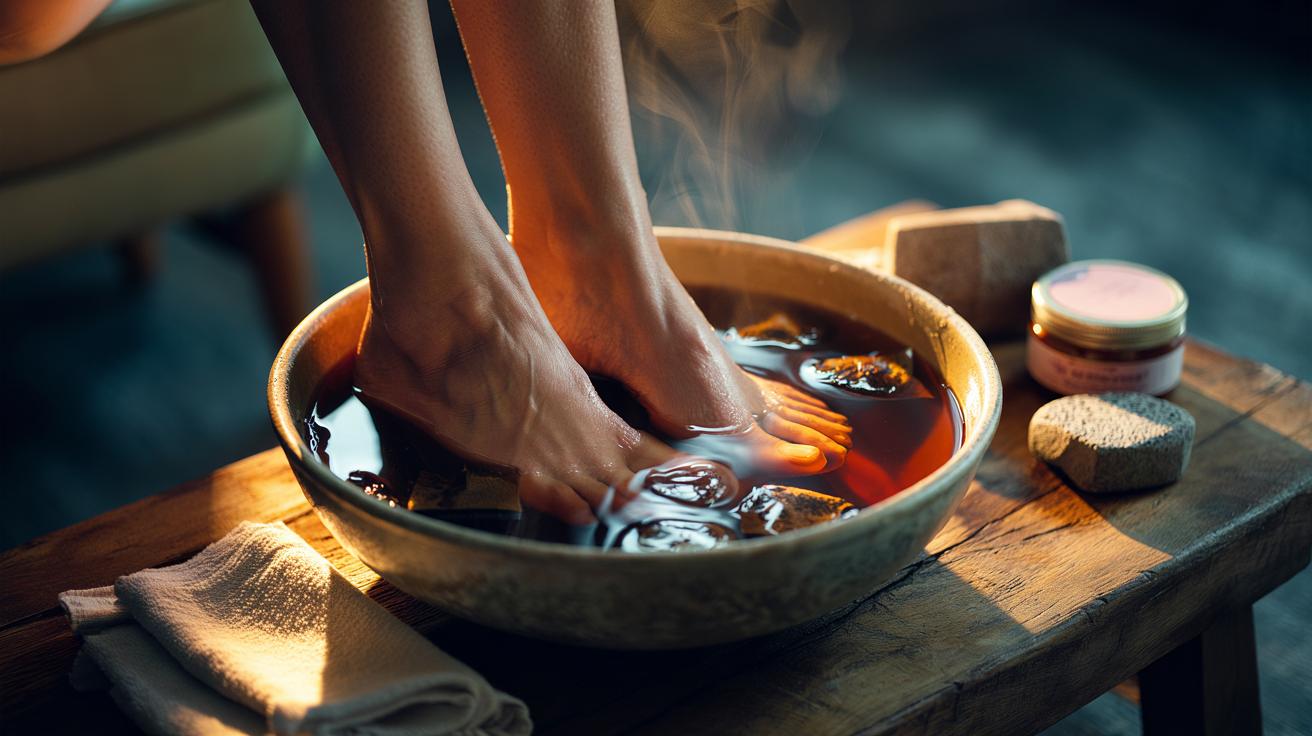
Build a strong brew. Place 3–5 regular black tea bags (or 2 large) into a heatproof bowl with 1 litre of freshly boiled water. Steep 5–10 minutes for a dark, tannin-rich infusion, then top with cool water to reach a warm, comfortable temperature (about 40–42°C). Hotter is not better. Remove the bags, submerge heels and soles, and soak for 10 minutes. Pat dry thoroughly. For immediate finesse, use a light pumice on softened callus areas, then apply a rich heel cream with urea (10–20%) or glycerin, sealing with cotton socks.
Repeat 2–3 times in the first week, then once weekly for maintenance. If you have open cracks that bleed, diabetes, neuropathy, or poor circulation, consult a clinician before soaking. Never soak broken skin without professional advice. Staining can happen: use a dark towel. Prefer green tea? It works, just slightly milder. Stronger brew, similar method.
| Tea Type | Relative Tannin | Notable Effect | Notes |
|---|---|---|---|
| Black tea | High | Fast tightening, visible smoothing | Best quick results |
| Green tea | Moderate | Gentle astringency, antioxidant boost | Good for sensitive skin |
| Oolong | Medium | Balanced feel | Works if on hand |
| Herbal “teas” | Low/Variable | Minimal astringency | Not ideal for smoothing |
What to Expect: Results, Evidence, and Safety
After a single session, many notice reduced roughness, less snagging on socks, and a subtle sheen where scales once looked chalky. That’s the signature of astringency. Realistically, deep fissures don’t vanish in ten minutes; they soften at the edges, making moisturisers and careful filing more productive. Over a week of consistent use, the combination of tightening plus emollients can deliver a visibly neater heel line.
Why trust the method? Astringent soaks are a staple in dermatology for surface management: they reduce exudate, temper irritation, and firm the outer layer. Black tea soaks also appear in small clinical protocols for sweaty feet, with reported benefits on odour and moisture control. It’s not a drug, but it is plausible, practical, and inexpensive. Safety matters: skip tea soaks if you’re allergic to tea or plant polyphenols, avoid on raw or infected skin, and stop if stinging persists. Tannins can be drying if overused, so always follow with a moisturiser. Expect mild staining of nails or towels—cosmetic, not harmful.
Make It Last: Aftercare and Prevention
Lock in the quick win with smart aftercare. Post-soak, apply a humectant-rich heel cream (urea, glycerin, lactic acid at low percentage), then top with an occlusive like petrolatum or a ceramide balm at night. Cotton socks boost penetration. File only when skin is softened and never to tenderness; over-thinning invites splits. Consistency beats force. Aim for two tea soaks in week one, then switch to weekly or as needed.
Prevent future cracking by protecting your barrier. Short, warm showers. Gentle cleansers. Moisturise daily, not just after soaks. Choose cushioned footwear with closed backs to reduce friction at the heel rim. In winter, run a humidifier; in summer, hydrate and mind sandal rub. If calluses recur rapidly, check fit and support of shoes, and consider a podiatry review. Nutrition helps too: adequate protein, essential fatty acids, and micronutrients support skin repair. The tea gives you a fast reset; your routine keeps the gains.
A tea bag foot soak is a small ritual with outsized impact: quick, cheap, and surprisingly satisfying. The tannins tighten, the warmth relaxes, and your moisturiser glides further than it did yesterday. Ten minutes is enough to tip roughness into smoothness when you brew it strong and finish with the right cream. Ready to test the kettle-powered fix tonight, or will you design a weekly “heel hour” with socks, balm, and a favourite podcast—what will your first step be toward softer, crack-free heels?
Did you like it?4.5/5 (24)