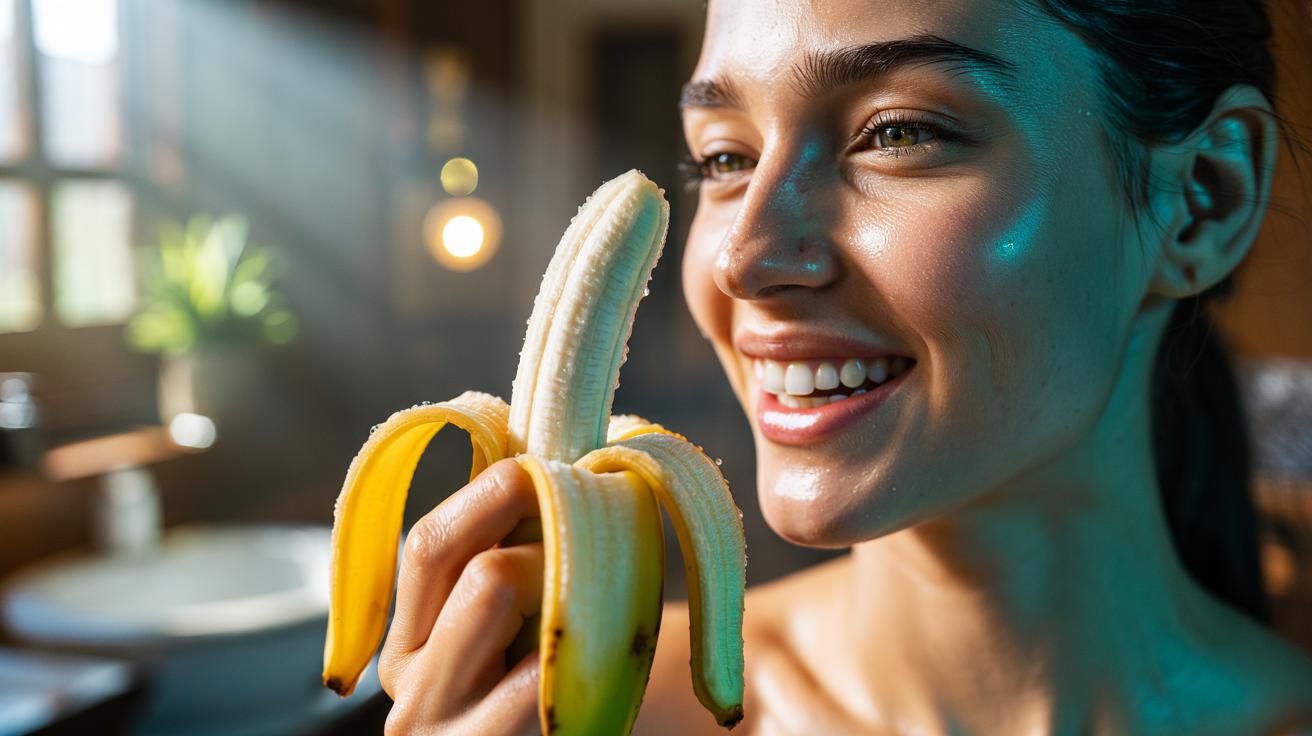
In a nutshell
- 🟡 Banana peel’s inner layer rich in potassium and minerals can gently interact with the tooth pellicle to lift light surface stains in minutes.
- 🧪 The effect is cosmetic, not true bleaching; potassium isn’t an oxidiser, offering mild polish and better light reflection without harsh abrasives.
- 📝 Simple method: rub the inner peel lightly 60–90 seconds, let sit 2 minutes, then brush with fluoride; use 2–3× weekly and stop if sensitivity occurs.
- ⚖️ Results are modest and temporary—about half a shade—ineffective on intrinsic stains or dental work; pair with professional hygiene and stain-smart habits.
- 🛡️ Safety first: avoid hard scrubbing, wash the peel, note allergies, and don’t replace evidence-based care; think “polish and perk,” not “bleach and transform.”
Beauty hacks come and go, yet one humble idea keeps resurfacing: rub the inside of a banana peel on your teeth for a quick, natural whitening lift. It sounds quirky. It’s also cheap, gentle, and easy to try at home. The claim rests on the peel’s silky inner layer, which is rich in potassium and other minerals and may interact with the tooth’s protective pellicle. That interaction can loosen superficial stains and leave a fleeting sheen without harsh abrasives. It isn’t a substitute for professional bleaching or your fluoride toothpaste, but it can offer a modest brightening for tea or coffee drinkers. Here’s what the science says, how to do it, and how to stay safe.
Why Banana Peel Might Brighten Teeth
Teeth are not bare enamel alone. They’re coated by the acquired pellicle, a thin protein film that traps colour molecules from tea, coffee, wine, and spices. The banana peel’s inner surface contains a mixture of lipids, polysaccharides, and minerals, including potassium, magnesium, and manganese. When you gently rub that side against the pellicle, you create low-pressure friction and leave a faint film that can smooth the surface and dislodge light, recent chromogens. Think of it as a soft cloth for glassware rather than sandpaper. That softness is the point: it brightens without scraping away precious enamel.
There’s also the moisture effect. Hydrated enamel looks glossier and lighter because it reflects light more evenly; a peel rub can briefly enhance that optical quality. A crucial caveat: rigorous clinical trials are sparse, and no banana-derived compound has been shown to “bleach” like peroxide. Any change is superficial and temporary, usually a shade at most. Still, for a pre-meeting tidy-up or after a curry, the method offers a low-risk tidy of the pellicle. Used sensibly, it can sit alongside routine brushing, flossing, and a fluoride toothpaste.
How Potassium Works: A Gentle Chemistry
In modern toothpaste, potassium often appears as potassium nitrate to calm sensitivity by stabilising nerve activity. In a banana peel, potassium doesn’t act as a bleaching agent; it isn’t an oxidiser and won’t strip deep stains. Its likely contribution is indirect. The ions can interact with the pellicle and saliva, encouraging a smoother, less “sticky” surface for stain molecules, while the peel’s waxy esters create a transient polish. The effect is cosmetic rather than chemical bleaching, and that distinction matters.
pH also matters. Banana peel tends to be close to neutral, far gentler than acidic DIY hacks like lemon and bicarbonate, which can erode enamel over time. The mildness means you’re less likely to aggravate sensitivity or roughen the surface, both of which can make teeth look duller. Combine that with subtle mechanical action—tiny cellulose fibres behaving like a soft buffing pad—and you have a plausible, low-intensity brightener. Still, stained resins, tartar, and internal discolouration won’t budge. For those, only professional cleaning, peroxide-based whitening, or restoration will help. Think “polish and perk” rather than “bleach and transform”.
Step-by-Step Method and Safety Notes
This routine favours patience over pressure. Go lightly, keep it clean, and be consistent.
| Step | Time | Notes |
|---|---|---|
| Select a ripe banana | — | Choose one with yellow skin and few brown spots; rinse the peel to remove residues. |
| Cut a strip of peel | 10 seconds | Use the inner, pale side for contact with teeth. |
| Rub gently on teeth | 60–90 seconds | Small circles, light pressure; avoid the gums. |
| Let the film sit | 2 minutes | Keep lips parted; allow moisture to mingle with the pellicle. |
| Brush and rinse | 1 minute | Use a soft brush with water or fluoride paste; spit, then rinse. |
| Frequency | 2–3× weekly | Stop if sensitivity or irritation appears. |
Never scrub hard—pressure abrades enamel and inflames gums. If you have a banana or latex allergy, skip this entirely. Buy organic if possible, and always wash the peel. Keep expectations sensible; do not use this in place of a hygienist’s clean or peroxide trays for deep stains. Avoid acidic drinks for 30 minutes afterwards to protect the surface. And stick to your daily oral hygiene: twice-daily fluoride brushing and interdental cleaning remain non-negotiables.
What Results to Expect, and What Not
Results arrive quickly—often within minutes—because the change is optical. Teeth can look a touch glossier and marginally lighter as surface stain is lifted and enamel is better hydrated. Subtle is the keyword. If you photograph before and after in daylight, you might notice half a shade’s difference. You may also find coffee and tea cling a little less that day. If you demand multiple-shade jumps, this is the wrong tool.
Here’s the realistic scorecard: banana peel brightening is inexpensive, accessible, and gentle, but its gains are modest and short-lived. It won’t move intrinsic discolouration from ageing, trauma, tetracycline, or fluorosis. It won’t whiten crowns or composite fillings at all. Compared with a whitening toothpaste, it’s milder; compared with in-surgery bleaching, it’s a blip. That said, as a pre-event polish or a maintenance habit between scale-and-polish appointments, it earns its place. Pair it with stain-smart habits—rinse after coffee, sip through a straw for iced tea, schedule regular hygiene visits—and you’ll notice steadier brightness over time.
Natural doesn’t have to mean naive. A banana peel rub is a tiny, tactile ritual that can smooth the pellicle, lift recent stains, and leave a temporary glow without risking your enamel. Use it as a complement, never a replacement, for fluoride toothpaste and professional care. If gentle, low-cost polish appeals—and your diet already includes bananas—this is an easy experiment. Try it for two weeks, track your results, and listen to your mouth. What would your ideal at-home brightening routine look like if you combined this polish with evidence-based habits?
Did you like it?4.5/5 (26)